Why Not?

There are so many powerful arguments for cold reads that it’s difficult to arrange them all into a cohesive statement. Which is more important? Fun & Games or Save the World?
Given that most people rarely (if ever) see play performed on stage, let alone read one out loud, perhaps the first response to the question “Why Read Plays?” is the classic comeback in the box. Click Why Not?
So Many Reasons Why
I’ve organized them under three broad headings: Personal Enrichment (Fun & Games and Social Skills), Cultural Heritage (Historic Moments and Drama Lit), and Salvation (The Wholly Human Art and Theatre as Religion, as described below. Hover over “Why Read Plays?” for tabs that link to a page for each—along with one for “Why Not?” (above) and one for “The Wholly Human Art” of theatre, live on stage. Essays arguing all these reasons appear in blog posts under Category Why?
Fun & Games
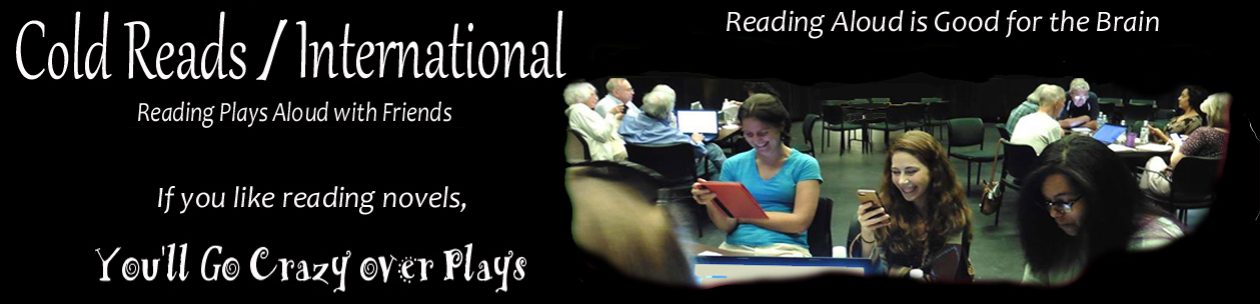
A play is (as the name suggests), the quintessential parlor game. Instead of playing cards or trivia, we read a play, and talk about it as we go. Sometimes we’re hilarious; sometimes deeply moved. It’s like all other games we play with other people—focused on its purpose, but digressing, interacting, sharing the creative experience.
Personal Growth
Cold reads stimulate the brain, enhance communication skills (reading, listening, speaking, interpersonal exchange), inspire imagination, foster friendships with like-minded souls, and open treasure trove of intellectual and emotional enlightenment and gratification.
Cultural Heritage
The western world is what it is in very large part because wise men wrote and produced plays that both reflected and profoundly affected their respective lives and times. From the Ancient Greeks till long past Shakespeare, they were how most people learned about the literary world (they couldn’t read), and their mesmerizing power both informed and moved them en masse, changed their hearts and minds, prompted riots and revolutions, causing church, state, and the upper crust to use (and abuse) them or ban them outright from the stage. If we are to have a future, we must understand the past, and the best source of that knowledge is dramatic literature.
Salvation
In these hard, cold, digital times, controlled by corporations and corruption, ethnic/religious/economic/social/political divisions, the human race is becoming less and less communal, less humane. Even our diversions veer away from recognition of the one and only thing all hold in common. Dramatic art affirms our shared humanity.
The Wholly Human Art
Finally, in the long run, cold reading is a simple first step toward the ultimate restoration of Theatre to its rightful place as the Temple of Humanism, where people come together no matter what we believe to celebrate our universal commonality.
Why Do You (or Do You Not) Read Plays?
Comment, please. Or Join CR/I and post your reasons. We’ll link them here.
George Gray: A Litany of Reasons for Cold Reading
David Watkins: Why Read Plays Aloud with Others?
The Guardian: Book Clubs Have Had Their Day
.
 Cold Reads/International