
UNDER CONSTRUCTION
(Drafted through the 1960’s)
DISCLAIMER: The following essay derives from what I’ve learned from life and what I’ve plagiarized from two primary sources: Oscar Brockett’s History of the Theatre, acknowledged as definitive, and
The History of Theatre According to Dr Jack (Hrkach) online, along with countless multitudes of Wikipedia articles. I beg the authors to forgive me; if I live long enough, I’ll add a million footnotes.
Roots in Religious Ecstasy
Before Thespis, the Greeks were scattered barbarian tribes descended from the survivors of the Trojan War (12th Century BCE) so loftily and brutally described by Homer (c. 800), and in the plays of the Golden Age to come. They worshipped their Olympian gods with week-long festivals that featured contests in a range of fields from the Olympic Games (combat, track and field) to music, dance, and poetry.
Most popular by far were those that celebrated Dionysus, the god of wine, where tribes (later demes) presented dithyrambic odes sung and danced by choruses of up to half a hundred men and boys, all trained and practiced, playing for First Prize—a goat.
Dionysus was the bastard son of the mortal virgin Semele and the great god Zeus who, on Hera’s orders, incinerated the mother and had her newborn son torn into shreds and boiled in a cauldron, then reconstituted and revived (like Jesus Christ)—“and from the soil where spilt his blood, there springs the vine.” Also known as Bacchus, the Goat God of grapes and fertility, inebriation—madness. His week-long festivals were celebrated with human (later goat) sacrifices, drunken orgies, and choral competitions—satyrs and maenads dancing around in a wild, lascivious frenzy, chanting hymns of praise:

“Evohe!
Blessed are the Thyrsus-bearers,
those who wield in their hands
the holy wand of god!
Evohe!”
Sort of like the Pentecost; but with a phallus.
You know what phalli are.
The First Actor/Dramatist
In 534 BCE, lyric poet Thespis, commissioned by the benevolent tyrant Peisistratus an the advice of Solon the Wise, won First Prize at the very first City Dionysia by stepping away from the chorus and pretending to be a hero or a god—a character—to become the world’s first actor.
The effect on citizens of Athens so impressed the tyrant that he used the new voice to promote his radical reforms—the philosophical, moral, and aesthetic values that became and (until recently) remained the essence of civilized society. So successful was his scheme that within barely twenty years his successor, Cleisthenes, introduced the world to democratic government, and the Golden Age of Greece ensued.
Everything that’s happened since is due, in part, to the Wholly Human Art.
By stepping away from the chorus and pretending to be a god or hero, Thespis won First Prize at the Athenian City Dionysia and introduced a rational voice to this chaos (c. 530 BCE), by which a man stands up to God and learns, and suffers irony, which benevolent tyrants employed to civilize the citizens of Athens, organize them into ten multi-tribal geographic “demes,” and (c. 509) create the western world’s first democratic government.
Religious Roots
When prehistoric people had no answers for natural forces that controlled their existence, they attributed them to the supernatural—super-human forces, gods—and began to search for ways to influence them, among which were music, song and dance, mimicry, self-sacrifice, epic stories, spectacle—all elements of theatre—which evolved into codes of religious ritual. So popular were these rites (and festivals) that they continued to be performed even after the mysteries were solved, at which point theater emerged as a separate entity.
Or so one theory goes.
The love/hate synergy between religion and theater through the ages is addressed in Thespis and Theocracy. This page narrates the historical context, how theater has been used and abused by church and state, the “powers that be,” to reflect, reveal, and often shape the course of human history.
Ancient Greece and (Lesser) Rome
Theater officially began in ancient Greece around 530 BC, when the tyrant Peisistratus, against the advice of Solon the Wise, allowed or prevailed upon the lyric poet Thespis to create an ode for presentation at the City Dionysia, in which he impersonated a mythic god or hero and argued with the chorus, thereby becoming not only the world’s first actor, but also its first playwright.
Dionysus & Democracy
Dionysiae were religious festivals. Dionysus was the bastard son of the mortal virgin Semele and the great god Zeus who, on Hera’s orders, incinerated the mother and had her newborn son torn into shreds and boiled in a cauldron; but Zeus reconstituted and revived him–like Jesus Christ—“and from the soil where spilt his blood, there springs the vine.” Also known as Bacchus, the Goat God of fertility and wine, lust and drunkenness. Which made the worship of Dionysus very popular—especially the week-long festival, what with satyrs and maenads dancing around in a wild, lascivious frenzy, chanting hymns of praise: “Evohe! Blessed are the Thyrsus-bearers, those who wield in their hands the holy wand of god! Evohe!” Sort of like the Pentecost, but with a phallus.

You know what phalli are.
It’s important to understand that until this time the Greeks were tribal savages whose barbaric exploits were mythic in the Iliad. By introducing tragedy into the bacchanal, Thespis opened the collective conscience to the wisdom of Homer. In tragedy, a man stands up to God and suffers irony.
By the end of the Sixth Century, the focus of the City Dionysia was a three-day contest among three dramatists, each of whom presented one trilogy of tragedies and, beginning in 501 BC (most likely to appease the bacchantes), one burlesque satyr play that ridiculed the tragic theme. A fourth day, for five competing comedies, was added later; meanwhile, in 508, just twenty-five years after tragedy was born, Athens introduced the world’s first democracy.
I’m not saying one resulted from the other, although it is significant that theater was by far the best means for entertaining and informing (and persuading) the masses—the TV of its time—and that the wildest party of the year was paid for by the state and sanctioned by religion. On the other hand, it gratifies me to believe the Greeks were brainwashed by the theater into achieving the Golden Age.
And there is evidence for this, if one allows as typical the example of The Oresteia, by Aeschylus, the only extant trilogy—until 2004, when his Achilles was reconstructed from papyrus fragments found in Egypt.
In the first play, Agamemnon, supreme commander of the Greeks at Troy and scion of the cursed House of Atreus, having sacrificed his daughter, Iphigenia, to Artemis to unfurl the sails of the Thousand Ships, returns home in triumph, only to be slaughtered by his wife, Clytemnestra, in reverence. Play Two: Years later, Daddy’s girl, Electra, persuades her brother Orestes to kill Clytemnestra, tit for tat; at which point the ancient Furies—serpent-haired, dog-headed, bat-winged daughters of Mother Earth—attack and pursue him into the wild. Play Three: Orestes finds his way to Athens and appeals for relief to the Goddess of Wisdom, who puts the case before a panel of twelve citizen judges.
The question was the importance of motherhood: Did the murder of one’s father justify matricide? The argument for Orestes, made by Apollo, was that a woman was no more than the inert furrow in which the husbandman casts his seed. When the jury locked at six to six, Athena cast the vote in favor of Orestes, and consoled the Furies by changing them into the kindly Eumenides, goddesses of hearth and home.
Two icons of the western world—Trial By Jury and Patriarchy—instilled in one fell swoop, endorsed by the goddess of wisdom, demonstrated graphically through the course of three violent and disturbing plays. (When the chorus of Furies appeared “in wild disorder in the orchestra,” according to an ancient account, they “so terrified the crowd that children died and women suffered miscarriage.”)
* * *
Aeschylus was one of only five Greek playwrights whose works we know today; of his eighty plays, only ten (counting Achilles) remain. Writing in the early days of the Athenian Democracy, his tragedies are “of the gods,” while those of Sophocles (seven of 120, including Oedipus), thirty years his junior, are “of heroes,” and Euripides (19 of 90), fifteen years younger still, “of men”—perhaps because, during their overlapping lives, Athens first achieved the Golden Age and then, one year after the deaths of Sophocles and Euripides, lost the Peloponnesian Wars. All three told the same familiar stories (Electra, for example). Aeschylus, however, dealt with epic themes, reflecting the confidence and vigor of a powerful state; Sophocles, a young man when the wars began, focused on heroic choice, civic duty, and personal responsibility. Euripides depicted human failure, exposing people as perverse, irrational, self-serving, decadent.
The fourth playwright was Aristophanes, younger still by 35 years but competing in the same contests, writing Old Comedy that ridiculed the war, among other things, and people—including Socrates, who knew all three.
The fifth, Menander was born a half century after all the rest were dead. By that time, Alexander the Great ruled Greece. The Golden Age was history, freedom of expression had been repressed, religion was a joke, and what theatre remained—although now secular, professional, and widespread—left no examples of Hellenistic Greek tragedy, (likely second-hand Euripides), and only one New Comedy.
Of more than a hundred plays Menander wrote, only The Grouch survived the sack of Rome and the Catholic Church; but from it and its long-lost ilk came the impetus for all that follows; hence his significance.
By his time comedy had dwindled from the irreverent satire of Aristophanes into what persisted through the ages, more for pleasure than instruction, to become the sit-com of the Modern age. Typical plots revolved around stock characters (young lovers, lechers, miserly old men, clever wives and servants, concubines, clowns) and involve sex, greed, gluttony, and mistaken identity. The chorus was abandoned; instead the plays were divided into five acts. Actors still wore masks, but there was an actor for every role.
These plays became the models for the scavenging Romans, who translated and adapted them and passed them on to the Renaissance, who passed them on through all the ages down to us, as musicals and sitcoms.
One line in particular, from a lost play by Menander, became a Greek, then a Roman proverb that influenced Petrarch, the father of Humanism in the 14th Century: “I am a human being: and I deem nothing pertaining to humanity is foreign to me.”
Ludi Romani
Plays were introduced in Rome in 240 BCE, and for 250 years, Roman versions of the lesser Greeks, like their predecessors, were written to honor Jupiter and performed at the annual Ludi Romani (Roman Games), the highlight of Rome’s many festivals.
Of all these many plays and playwrights, only three left works behind. Plautus (254-184 BCE), a lowly comic actor, wrote comedies modeled on Menander, twenty of which survive intact and a few of which still play. Menaechmi (Twin Brothers) is the source for Shakespeare’s Comedy of Errors; Milos Gloriosus (Swaggering Soldier) for A Funny Thing Happened on the Way to the Forum.
Likewise Terence (c. 190-c. 159), born in Libya six years after Plautus died and brought to Rome a slave, whose six existing comedies reflect the growth of Republican Rome. His masterpiece, Hecyra (Mother-in-Law), however, is thematically inappropriate for civilized society today (a young man rapes a young girl in the dark who soon later becomes his loving wife).
And three generations later, in the early Empire, Seneca (4 BCE – 65 CE), a Spaniard raised in Rome, left eight tragedies based on Greek originals, with gory, graphic plots and long, rhetorical speeches that lead most scholars to believe they were intended to be read, not played. (That said, this author saw the 1969 Peter Brooke production of Seneca’s Oedipus in London, and it blew him utterly away. But that’s another story somewhere.)
All in all, this trio’s plays rank far below their old Greeks masters, but the fact of their existence is the link to all the rest of western drama!
Decline and Fall
Everything changed drastically when the Republic became the Empire (27 BCE) and Christ rose from the dead. By that time Rome ruled the world, but power corrupts; Nero fiddled while Rome burned, and theatre declined in favor of a vast array of popular amusements, from circus acts and sideshows to chariot races and gladiatorial contests. The Wholly Human Art survived as coarse and brutal burlesque mimes that ridiculed minorities—especially the new religious cult, with its silly saints and martyrs, whose beliefs were particularly susceptible to derision.
Over time, however, the new religion found its following, and swelled in number until the Emperor Constantine converted (312 CE) and Theodosius I, in 393, outlawed the practice of any religion except (Roman) Catholicism, five years later the Council of Carthage denounced all pagan theatrics and specifically excommunicated all actors who would not forswear their profession—a decree not rescinded in many places until the eighteenth century!
According to the binary thinking of the Church’s early followers, everything that did not belong to God belonged to the Devil; thus all non-Christian gods and pagan religions were satanic. Efforts were made in many countries through this period to not only convert Jews and pagans but to destroy pre-Christian institutions and influences. Works of Greek and Roman literature were burnt, the thousand-year-old Platonic Academy was closed, the Olympic Games were banned and all theatres were shut down. The theatre itself was viewed as a diabolical threat to Christianity because of its continued popularity in Rome even among new converts. Church fathers such as Tatian, Tertullian and Augustine characterized the stage as an instrument in the Devil’s plot to corrupt men’s souls, while acting was considered sinful because its imitation of life was considered a mockery of God’s creation.
These decrees mark the official beginning of both the Christian bias against what they righteously (and often rightly) perceive as the godless religion and the off-and-on, love-hate relationship that through the centuries implanted scurrilous attitudes that remain ingrained our psyches today. Examples appear frequently throughout this essay in historical context. For a comprehensive analysis, read Thespis and Theocracy.
Dark Ages
Some wonder if the proscription of theatre throughout western Europe caused the Dark Ages of the next 600 years, during which time religion battled for souls and pondered the puzzle of how many angels could dance on the head of a pin.
Others note the irony of an Easter Sunday near the end of the first millennium, in the predawn light of the Renaissance, at the Catholic monastery of St Gall, in Switzerland, where priests impersonating angels and the Marys acted out the Quem Quaeritis trope, in Latin:
“Whom seek ye in the tomb, Oh Christians?”
“Jesus of Nazareth, the crucified, O Heavenly Beings.”
“He is not here, he is risen as foretold. Go and announce that he has risen from the tomb.”
Ironically, almost simultaneously, a German nun, Hrotsvitha (935–73 CE), “the most remarkable woman of her time,” wrote six plays in Church Latin, modeled on Terence (but with Christian themes), to become the world’s first Neoclassic playwright, and one of the very few whose whose names and works appear until the late Fourteenth Century. Whether these plays were performed in their time is doubtful—surely not for the laity; they were in Latin, and theatrical performances were still forbidden.
Not so with Quem Quaeritis. In no time scriptural tropes turned into playlets, in vernacular dialects, based on Bible stories to attract worshipers, so successful that they overflowed into the streets and spread all over Europe, converting monarchs and their subjects to the One True Faith.
Renaissance
The evolution of dramatic literary art over the next five hundred years creatively reflects and helps define the phenomenal transition of western culture from the Great Schism in in the Catholic Church through the Holy Wars, Italian Humanism, and the Protestant Reformation, into the Renaissance, which led to the Enlightenment, the Modern Age, and since.
Meanwhile, from the late 13th century, secular moralities, court interludes, folk plays and farces cropped up here and there to entertain non-Catholic audiences. While relevant and popular in their time, these rudimentary works are significant only for the influence on the English Renaissance.
Holy Wars
In 1054 CE, less than a century after Hrotsvitha and the Quem Quaeritis, the Roman Catholic Church split in two—the Orthodox East and the Roman West, which led to the the Crusades (1096-1271), the Great Famine (1315-17), the Hundred, Years’ War (1337-1453), and the Black Death (1347-51), all of which resulted in a catastrophic reduction in the population and the consequent restructuring of European society.
During this time, liturgical plays (in Latin) filled the pews and spilled out into the streets (in native tongues) to spread the Gospel all over Europe, produced and performed by layman guilds as cycle plays (the Bible, from Genesis to Revelations, played on pageant wagons) and Passion plays (for Easter), miracles and mysteries (lives of the saints), and allegorical Morality plays on Godly themes.
The effect of these plays on history is utterly astounding.
For starters, they were a welcome escape from the workaday world, far more engaging than the ritual mass; fannies filled the seats. More to the point, with death and dying all around, (hunger, pestilence, and war), the underlying promise of an afterlife revitalized the faithful and converted (or conquered) pagan kings all over Europe. By 1300 the whole continent was Christian.
Meanwhile, secular theatrics began to appear—court interludes, the Feast of Fools, Corpus Christi, folk plays, pastorals and farces—some very few preserved in print but rarely played (and only read by scholars). The only playwright history remembers prior to the Renaissance is Adam de la Halle (1240-88).
All of these forms flourished throughout the Middle Ages, entertaining and enlightening (and preaching to) the multitudes—until the Reformation, which ushered in the Renaissance, Shakespeare and Moliere.
Rebirth in Italy
Early in the The Fourteenth Century, famine and the Black Death wiped out twenty-five million Europeans—a third of the population—while the Hundred Years’ war took even more. Faith in God gave way to Humanism (“Man is the measure of all things”), influenced by the decline of feudalism, the growth of cities, the increased power of princes, and challenges to church dominance over life and learning, the last leading to renewed interest in ancient principles and practices.
Hardest hit was Italy, the hub of Medieval trade, losing more than half its population and, as the seat of the Roman Pope, it was not only the center of the Catholic world; it was the source of European scholasticism. Add to these the impact on the minds of Fourteenth Century Romans amidst the ruins of the Rome that was, and it makes sense the Renaissance begins in the Continental “boot.”
Humanism
“There was a time,” wrote Petrarch,
” . . . there was an age, that was happier for poets, an age when they were held in the highest honor, first in Greece and then in Italy, and especially when Caesar Augustus held imperial sway, under whom there flourished excellent poets: Virgil, Varius, Ovid, Horace, and many others.”
If, as most scholars say, the Renaissance in Europe marks the beginning of the Modern Age, its founder was the Tuscan poet Petrarch (1304-74), a popular cleric who scoured the ancient world for manuscripts, translated them into Tuscan dialect (which became the Italian language), and emulated them with his own (Petrarchian) sonnets. Equally important, he translated the political works of Cicero which, together with the writings of Dante and Boccaccio and the paintings of Giotto—among the many others who followed—would shape the culture that became the modern world.
From Cicero, Petrarch derived notion that humankind should look to human needs, interests, and abilities rather than the supernatural. Specifically, he abandoned church scholasticism and advised the study of in grammar, rhetoric, poetry, moral philosophy, and history, along with a general recognition and appreciation of ones fellow human beings. Thus began the shift from God to man that over the next two centuries produced the flood of secular achievements in art and architecture, poetry and prose, music, philosophy, science and technology, and exploration that blossomed in Italy and spread over the next two centuries all over Europe.
Politically, the continent divided into city-state nations based on language, colloquial culture, and Machiavelli’s masterpiece, The Prince, published in 1513. All remained unhappily under the thumb of the Pope, but the Church was confused and weakened by the Schism and internally corrupt, so the monarchists began to question, doubt, defy, transgress, and call for reformation.
On Stage
Theatre remained religiously Medieval (and anonymous) until the beginning of the Sixteenth Century, for reasons ranging from the papal ban of 592 to poverty and Protestant ethics. Classical plays were studied for rhetorical, moral, and stylistic values, and imitated, but not performed until late in the next century, and only then the works of Plautus (in Latin), played for princes and their courts. The imitations were solely for scholars, and had no significant impact on the masses.
The first play since the Fall of Rome was Lodovico Ariosto’s comedy, The Casket, written in Italian and performed for a courtly audience in 1508, followed by the works of numerous other writers. By the 1540’s plays were included (among other entertainments) in all the many festivals and celebrations in Italy and elsewhere.
Very few of these plays match up to their Greek and (mostly) Roman models, and had no impact on the course of history, although developments in dramatic and theatrical art—specifically the rediscovery (and misinterpreted translations) of Vitruvius (De Architectura, printed in 1486 ) and Aristotle (Poetics, 1498)—became the misguided rules that governed theatre for centuries, and remain today the standard against which playhouses and plays are measured.

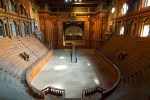
The first theater built since ancient times (and still standing) was the Teatro Olimpico, in Vincenza, in 1580—essentially as miniature indoor copy of a Roman amphitheater—but this model soon evolved into the prototype of the modern stage, with a proscenium arch, wing and drop scenery, and an open thrust, typified by the Teatro Farnese (1618).
Meanwhile, in 1597, Jacobo Peri, born in Rome but schooled in Florence, mixed text with music in his conception of Greek drama to produce Dafne, the world’s first opera, and from that point on—with one exception—Italians virtually ignored the spoken word in favor of the new form.
The exception was commedia dell’arte, an early form of professional theatre composed of strolling players performing largely improvised (and scandalous) sketch comedy in court and in the streets. Its origins are debated; some scholars find its roots in Rome, some in Hellenistic Greece, while others recognize elements of Medieval moralities. The first recorded commedia dell’arte performances came from Rome as early as 1551. It’s theatrical landmarks are its introduction of the art of pantomime and the first female performers to the stage, and the influence of its characters and scenarios on comic writers to this day.
It also offended the righteous with its bawdy, lewd depictions, branding theatre itself as sinful and profane.
Reformation
The world began to change quickly in the late Fifteenth Century, with the invention of the printing press, the rise of nations, the discovery of the New World, the Telescope, Renaissance art—and the Ninety-five Theses of Martin Luther (1517), which ignited the Protestant Reformation.
Politically, the West, throughout the century and half of the next, was all about the ideological war between the Pope and a number of European princes, who rejected the weak and corrupt—but imperious—Catholic hegemony in favor of the pious Protestants, who claimed no divine authority over their humanistic tendencies.
One of the primary weapons in the war was drama, used by both as propaganda, first with Medieval church plays, at their peak of popularity; later mixed with didactic imitations of the Romans, both with socio-religious plots and themes that accused the opposing dogma and often led to riots. To address this problem, both sides took drastic steps.
In England, Henry VIII led the way in 1548 by breaking ties with the Catholic Church, and Elizabeth, in the first year of her reign (1558), banned all plays with religious plots and themes. Soon other nations followed suit.
The Church responded with the Counter Reformation, beginning with the Council of Trent, (1545-63), which (among other things) abandoned and disparaged plays in general and enforced the papal Inquisition.
The Rise of Nations
The Reformation officially ended in 1555 with the Peace of Augsburg, which guaranteed each European prince the right to determine the religion of his own state and effectively ended the Papacy’s pan-European political power. Given this right, some rulers remained Roman Catholic, while others embraced one of the several new Protestant religions, thereby creating a checkerboard of nationalities with unique and diverse cultures, all competing for advantage, no longer bound by common (canon) law—and the world turned upside down.
For a thousand years, the Church had governed thought, restricting it to ecclesiastic topics, excluding science and secular philosophy, permitting only (Byzantine) Christian art, and excommunicating (or burning) heretics. Unchained, the princes, scholars, and the masses were free to study and explore, invent, create.
In Italy, still staunchly Catholic (as well as the birthplace of humanism), the super-rich and powerful banker, Cosino (“the Great”) Medici, Duke of Florence, then Grand Duke of Tuscany, from 1537 to 1574, promoted the paintings of Florentine artists (Giotto and Da Vinci, among others), whose works reflected the humanistic trends first put forth by Petrarch, Boccaccio, and Dante, two centuries before, all inspired by the works of the Ancient Greeks and Romans.
Ancient texts had been available throughout the Middle Ages, but known only by priests and scholars; indeed, there was little else to read. They studied Cicero and Virgil, Cato, Ovid, Horace, and (significantly) the playwright, Plautus. As more people learned to read, these works were printed and published (plays performed), first in Latin, then translated and imitated, their thoughts assimilated into popular belief. More to the point, the rise of nation-states found their rulers faced faced with the task of governing, and the turned to the classics for guidance—as did artists and architects, poets, historians, and philosophers—and one by one, the countries of Europe entered the Modern Age.
Meanwhile, society itself had changed dramatically. The feudal system had collapsed during the years of famine, pestilence and war, as serfs abandoned the fields and flocked to the cities, where a merchant class arose, with banks (the dawn of capitalism!) to finance ships that brought in riches from far-off lands. The Thirty Years’ War (1618-48) war strengthened national identities, with governmental systems and trade guilds. Gutenberg’s press made printed words in native tongues available. and the well-to-do began to read (their children went to school).
The sudden disappearance of religious drama left a great hole in the fabric of European society, which slowly began to be filled by plays on secular themes, written by educated (humanistic) dramatists and performed by professional actors in the courts of kings and queens.
First Spain and Portugal, then England, France, and the Netherlands grew in wealth and power, with colonial empires abroad, while the Holy Roman Empire remained divided into literally hundreds of German and Italian principalities. All over Europe, whether rich or poor, large or small, Catholic or Lutheran (Calvinist, Anglican, et. al.), newly independent nations, with their many languages and customs, feudal histories, cultural traditions, and ethnic roots, evolved into bordered states, in conflict with each other and within themselves over land, religion, politics, and trade.
At this point, although Italy remained for some time the major source of humanistic art and science, producing Michelangelo and Galileo (among many others), its political and economic powers slipped away, first to Spain and Portugal, then the Netherlands, England, France, all enriched by foreign trade For the first time since the Ludi Romani (240 BCE), Rome was no longer the dominant force in the Western world, and never since has it had much influence on it.
Meanwhile, along with wealth and power came the humanistic ideals and examples set by Italian writers as, one by one, the nations of Europe entered the Age of Reason.
Three Golden Ages
The Renaissance first spread first to Catholic Spain, the richest and most powerful nation in Europe by then, where (oddly) both religious and secular plays continued to be played despite the papal ban throughout Spain’s Golden Age (1580-1680). Tens of thousands were written and performed in both court and public theaters, and although most lack depth and purpose, the works of Lope de Lueda (1510-1565) , Lope de Vega (1562-1635), and Calderon (1600-1681) rank among the finest in dramatic literature.
Meanwhile, in Protestant England, two factors shaped an essentially English form of drama that reached its peak with Shakespeare. The first was Queen Elizabeth’s prohibition of religious plays in 1558, which opened the door for Medieval players to fill the gap with secular pastorals, farces, and interludes; the second, in the early 1580’s, was the humanist influence of the University Wits, a handful of young Oxford and Cambridge scholars favored by the Queen, whose neoclassic (humanist) style adopted non-religious elements of Medieval forms. Their plays were performed at court and in public theaters, and very early on instructed and inspired the work of their unschooled peer, the actor, William Shakespeare.
Theatre in France developed much more slowly, with court and school performances of church, indigenous, and neoclassic plays until Corneille produced Melite in 1629, which changed the course of comedy), and El Cid in 1637, which challenged the Neoclassic Ideal (and lost) and paved the way for Racine and Moliere, all during the 72-year reign of Louis XIV (1643-1715).
The Golden Age of Spain ended before 1700, its power and wealth diminished, never to recover, but England and France established roots that would continue to evolve throughout the coming ages, shaping the course of history, reflected by dramatic art.
NOTE: From here until the U.S. wins the war, this narrative will focus on English-speaking drama, although significant happenings in other countries will be addressed as they pertain to theatre.
The English Renaissance
“can this cockpit hold
The vasty fields of France? or may we cram
Within this wooden O the very casques
That did affright the air at Agincourt?
The first true Protestant Reformer was the English cleric John Wycliffe, whose De Ecclesiasti (1378) preceded Martin Luther by four decades and who first translated the Bible into indigenous dialect (1384), but (before his time) he was excommunicated, declared a heretic, his books burned, and his followers (Lollards) cruelly persecuted out of existence. More than a century would pass before Italian humanism made its way to England.
Before Elizabeth
England barely survived the Hundred Years’ War—having failed in its claim to the French throne and losing all its French possessions—and immediately engaged in the internal Wars of the Roses, which lasted until the Battle of Bosworth Field in 1485, when the evil Richard III of the White Rose House of York was slain, and young Henry Tudor, Earl of Richmond, last male left in the Red Rose House of Lancaster, claimed the throne as Henry VII, restored law and order, and formed alliances with France, Spain, Scotland, the Holy Roman Empire, and the Pope. By the time of his death in 1509, England was second only to Spain in European wealth and power.
Henry VIII (1491-1547) was seventeen when he came to the throne, and during his 28-year reign, while he greatly increased the power of English government, he also managed to squander most of his father’s legacy with his lavish lifestyle and wars with Spain, France, Scotland, and the Hapsburgs. His six wives led to his break with the Catholic Church (1534) and establishment of the Church of England, over which he ruled by Divine Right, persecuting both his conservative papist subjects and the upstart Puritans.
Edward IV (1537-1553), his only son, ascended the throne at the age of nine, reigned for only seven years, and died of a mysterious ailment—or poison, or (according to Churchill) “debauchery.” His rule was governed by the corrupt Duke of Somerset, who squandered what was left of England’s treasury on bribes and war with Scotland (and France), and widespread domestic rebellions over land, taxation, and religion.
Following Edward’s death and the nine-day reign of 17-year-old Lady Jane Grey, “Bloody” Mary I, Henry’s daughter by his first wife, married Catholic King Phillip II of Spain and wasted her five year reign in a cruel attempt to restore the Roman Church.
Tudor Drama
Medieval plays, in all their forms, now spiced with bawdy, sometimes sacrilegious humor and spectacular effects, reached their peak of popularity in England, as in the rest of Europe, during the Protestant Reformation, and were used extensively (along with cruder, crueler tactics) by the Tudor Henrys to argue, VI and VII, for the Pope; then VIII, for his Church of England against the Pope and the Puritans, then (under “Bloody” Mary) for the Pope again, while all of their opponents responded in kind.
Meanwhile, at court and in college, a whole new form of drama was taking shape, as wealthy nobles engaged troupes of paid performers and designers and commissioned playwrights to write scripts for lavish interludes and masques to entertain their courtly friends and prove their affluence, while Oxford scholars copied the classics and wrote imitations, and performed them at their inns.
In 1497, twelve years after the last War of the Roses, Henry Medwell’s Fulgens and Lucrece—the first play written in English—was performed at the court of Henry VII. Essentially a Medieval morality play with a secular sub-plot (a pastoral love story with a comical twist), it set the stage for lesser nobles to hire players for their own courts, and these players, when they weren’t needed, “moonlighted” in the streets and public houses, mingling with the popular religious plays, performed by tradesmen.
Just two years after Medwell’s play, in 1499, the Italian Erasmus, “The Prince of Humanism,” assumed a chair at Oxford University to teach Classics to aspiring lawyers, doctors, and priests, who read Greek and Roman plays to learn rhetoric, elocution, and the neoclassic rules of drama, often performing them for fellow scholars. Soon they began to write their own, first in Latin, then in English. The best known (and still hilarious) is Gammer Gurton’s Needle, a broad Medieval farce by “Mr. S,” performed at Cambridge c. 1552. The plot centers on the loss of a needle belonging to Gammer Gurton. It is eventually found when her servant, Hodge, is slapped on the buttocks by the trickster figure Diccon and discovers it in the seat of his breeches.
During all this time, alongside this newer form, Medieval plays continued, in the courts and in the streets, as Henry VIII asserted his Divine Right and plays took sides in the struggle for bodies and souls. King Johan, for example, by John Bale, in 1538—the first English chronicle play (and model for Shakespeare’s King John)—bashed the Holy Roman Church and praised his distant predecessor (never mind he was a Roundhead) for standing up to the pope (although he lost the battle), then glorified the living king, proclaiming Henry VIII “Protector and Supreme Head of the English Church and Clergy.”
Topically dated and didactic, very few of these plays were printed, and have rarely been performed in the centuries since, but their influence on their time was of vital importance to the course of English (and consequently world) history.
The Elizabethan Era
The English wars with Spain over religion and New World colonies continued during the reign of the Virgin Queen, her pirates plundering Spanish ships, until the Armada in 1588, after which Spain’s fortunes fell and England, under her prudent rule, recovered wealth and relative peace, and became a primary force in Europe and abroad—a prominence that would last until the American Revolution.
Internally, however, religious conflicts with both Catholics and Puritans continued, as they would throughout her reign, despite her suppression of plays with religious content, and lasted through the reigns of her successors.
The University Wits
By the time Elizabeth came to the throne, any gentleman could maintain a troupe of actors that played at court, in Halls and Inns, the streets, and toured the countryside. In 1572, she restricted this right to nobles only, and two years later granted the first royal patent to the Earl of Leicester’s Men, headed by James Burbage. Two years after that, in 1576, Burbage built The Theatre (the first permanent playhouse in England), where non-religious plays were performed by professional actors. (In 1589, for political reasons, this structure was dismantled and reassembled outside London’s city limits and renamed The Globe, destroyed by fire in 1613, rebuilt the following year, and closed in 1642.)
Meanwhile, other nobles received patents, and acting troupes sprang up all over England, producing well over a thousand plays during Elizabeth’s 45-year reign (600 still exist), written mostly by the actors themselves, collaboratively. History remembers the names of only a few professional dramatists before Shakespeare, known collectively as the University Wits, two of whom stand out, both for the intrinsic value of their works and the influence they had on those of the Bard.
-
- Thomas Kyd wrote The Spanish Tragedy (c. 1587), the most popular play of the Fifteenth Century—the first revenge play—which is often considered to be the first mature Elizabethan drama (and still plays well today). He also (maybe) wrote the lost Ur-Hamlet, prototype of the (likely) best play ever written.
- Christopher Marlowe wrote the monumental Doctor Faustus, and The Jew of Malta, the likely inspiration for The Merchant of Venice.
It is significant to note that these plays were performed for public audiences, who paid a penny to stand in the crowded yard; a penny more for a seat in the gallery. Anyone who had the time was welcome, and the houses were always full.
The Bard of Avon
At some point in the late 1580’s, young Will Shakespeare joined the Burbage troupe as an actor and started writing plays, perhaps beginning with A Comedy of Errors, based on Plautus’s Menaechmi, perhaps as early as 1589, then four (or five) histories of English monarchs (three Henry VI, Richard III, and maybe Edward III) by 1592, revised and adapted to honor and defend the Tudor dynasty.
These questionable facts are countered by some scholars, who place the histories first, or Two Gentlemen of Verona and The Taming of the Shrew. Many doubt the Shakespeare wrote Edward III. In point of fact, what little evidence there is of his life is vague and subject to interpretation.
The future best playwright of all time was the son of a village glove-maker, grammar-schooled in Latin and the classics, but no college, and the University Wits belittled him at first, for rising above his class; Robert Green dubbed him an “upstart crow,” but by 1594 he was a shareholder in the Lord Chamberlain’s Men, with Burbage and his son Richard, who together played the leading roles in all the upstart’s plays.
Shakespeare’s thirty-seven plays (in twenty-five years) both entertained and educated (“pleased and profited”) the people of his time, subtly shaping their minds and attitudes, their ethics and morality, with tragic (and comic) examples of good and bad behavior, past and present.
They also made him a wealthy, highly regarded citizen, head and shoulders above his peers, and to this day the most frequently produced playwright in the world; his Hamlet almost universally acclaimed the greatest play ever written.
There are no words to express the enormous impact Shakespeare’s works have had on the history of the western world. His words of humanist wisdom are quoted more than those of the King James Bible, and the best ones one might use are likely his.
“If you cannot understand my argument, and declare “It’s Greek to me”, you are quoting Shakespeare;
“if you claim to be more sinned against than sinning, you are quoting Shakespeare;
“if you recall your salad days, you are quoting Shakespeare;
if you act more in sorrow than in anger; “if your wish is farther to the thought; if your lost property has vanished into thin air, you are quoting Shakespeare;
“if you have ever refused to budge an inch or suffered from green-eyed jealousy, if you have played fast and loose, if you have been tongue-tied, a tower of strength, hoodwinked or in a pickle, if you have knitted your brows, made a virtue of necessity, insisted on fair play, slept not one wink, stood on ceremony, danced attendance (on your lord and master), laughed yourself into stitches, had short shrift, cold comfort or too much of a good thing, if you have seen better days or lived in a fool’s paradise -why, be that as it may, the more fool you , for it is a foregone conclusion that you are (as good luck would have it) quoting Shakespeare;
“if you think it is early days and clear out bag and baggage, if you think it is high time and that that is the long and short of it, if you believe that the game is up and that truth will out even if it involves your own flesh and blood, if you lie low till the crack of doom because you suspect foul play, if you have your teeth set on edge (at one fell swoop) without rhyme or reason, then – to give the devil his due – if the truth were known (for surely you have a tongue in your head) you are quoting Shakespeare;
“even if you bid me good riddance and send me packing, if you wish I was dead as a door-nail, if you think I am an eyesore, a laughing stock, the devil incarnate, a stony-hearted villain, bloody-minded or a blinking idiot, then – by Jove! O Lord! Tut tut! For goodness’ sake! What the dickens! But me no buts! – it is all one to me, for you are quoting Shakespeare.”
Bernard Levin
“Lilies that fester smell far worse than weeds”
Stuart Rule
James I (reigned 1603-25) was a popular king among the Anglicans, a humanist who patronized the arts and kept England out of the Thirty Years War, but he barely survived two Catholic plots to depose him and the Gunpowder Plot to blow up Parliament. He granted a charter to the Virginia Colony colonize the New World (Jamestown, 1607) and commissioned the translation and publication of the King James Bible (1611), but corruption among his favorites at court and the militancy of his son Charles depleted the royal treasury, and his persecution of the Puritans prompted them emigrate to Plymouth Rock (1620).
Charles I (reigned 1625-49) inherited a serious budget deficit and a rebellious populace, worried by his Catholic marriage, his Divine Right to rule, his corrupt court, his wars with Spain, France, and Scotland, and his taxes. He lived among the elite, patronized the arts, and enjoyed lavish living, but an increasingly Puritan Parliament forced concessions that erupted into civil war in 1642, during which he was deposed and beheaded in 1649.
Jacobean and Caroline Plays
Just as Greek and Roman drama had declined as their governments decayed, so did the English Renaissance. Tragedies devolved into tragicomedies, with happy endings, and comedies were cynical and shrewd. The Crown appointed a Master of the Revels to officially approve and censor scripts; the audience wanted more thrills and excitement, and Shakespeare’s Sophocles slipped into Euripides.
That said, the reigns of James and Charles produced a growing number of professional playwrights whose works, while not profound in scope, refined the structure of Elizabethan drama, compressing action into fewer episodes and building them to startling climaxes. This new and improved format would become the model for English plays from the Restoration through the Eighteenth Century.
Second only to Shakespeare, who wrote half of his plays after the death of the Queen, the greatest playwright of the Tudor age was Ben Johnson, whose twenty-eight comedies include Every Man in his Humor (1598), Volpone, or The Fox (1606), The Alchemist (1610), and Bartholomew Fair (1614), which play well on our stage today.
Of the scores of other playwrights patronized by James and Charles, only six are singled out as worth of a mention, and their plays are rarely played today. In their time, however, their tawdry and salacious contents—and the offstage antics of the actors—offended the sensibilities of the growing number of intolerant Puritans, who used them as a weapon in the looming Civil War and branded them forever “sinful, heathenish, lewd, ungodly spectacles, and most pernicious corruptions.”
Interregnum
The Puritans were extremely righteous folk who railed against all non-religious forms of popular recreation and celebration, from Christmas and Easter to bear-baiting, cock-fighting, prostitution, and most particularly, the theatre, by this time at its most licentious, playing in the seedy outskirts of London. Among the first of Oliver Cromwell’s decrees was the closing of all playhouses, and for the next eighteen years, plays were banned in the British Isles and its American colonies.
The cultural significance of this decree was profound. It fixed in the minds of the righteous right the belief that plays were the work of the devil, and all who played were bound for hell. For a while it seemed a new Dark Age had begun.
Thankfully, the English bounded back with the Restoration of Charles II, but the Puritans, defeated, sailed off to join their fellows in the New World, where there would be no plays for the next two hundred years, and where the stigma still remains, eternally ingrained in our collective subconscious. Otherwise, Americans would attend.
Restoration
“Merry” King Charles II (reigned 1660-1685) came to the throne at the age of thirty, having spent the last fifteen years in exile, to face a parliament divided among Tories and Whigs, but united against his Divine Right to rule and demanding constitutional concessions, one side for mandatory allegiance to the Church of England, the other for any of a number of dissenting minority versions of Christianity—Scottish Presbyterians, Irish Catholics, Anabaptist Puritans—all in conflict among themselves and all the others. The Reformation may have ended in 1555, but the fight for Best Religion (or the right to survive) continued between nations and within, with purges and witch hunts, and despite his argument for humanistic tolerance, the Anglicans prevailed.
Add to all this turmoil the Great Plague (1665) and Great Fire (1666) of London, occasional wars with France and Scotland, and his marriage to a Spanish Catholic who couldn’t bear an him an heir, and his 25-year rule was fraught with tension.
On the other hand, his years mark both the zenith and the end of the English Renaissance, featuring the sciences of Newton and Bacon, the philosophies of Hobbes and Locke, the poetry of Milton, Dryden, and Donne, and expanded English holdings in America (the Carolinas). His years in the courts of France and the Low Countries had taught him how to live in scandalous style: his seven (of possibly fourteen) mistresses delivered as many as seventeen little bastards.
More to the point, he immediately rescinded the ban on theatre and licensed William Davenant and Thomas Killigrew to present plays, first in the old Elizabethan theaters, then at Lisle’s Tennis Court in Lincoln’s Inn Fields (1661) and the proscenium playhouse at Drury Lane (1663). Within the next few decades, these companies evolved through the ups and downs of politics and religion into the brilliant second climax, denouement, and conclusion of the English Renaissance.
Two decades without theatre meant there were no recent English plays, and no professional playwrights, so they had to start from scratch. At first the repertoire consisted of scripts played in his predecessors’ times, but Charles was in a fight with Parliament, and plays were a useful tool in shaping public attitudes. A new handful of dramatists emerged, and with them a new form: heroic tragedy, in exotic settings, allegorically exalting the King and his right to rule.
The first among these notables was young John Dryden, soon to become England’s first Poet Laureate, whose career is a prime example of the relationship of drama and society. Born and raised a Puritan, officially involved in Cromwell’s Protectorate, he adroitly jumped on Charles’s Anglican ship as soon as it landed, praising him in poetry, prose, and drama, beginning with The Indian Queen (1664).
But Charles had lived abroad, in continental Cavalier style, under the influence of neoclassic humanism and royal opulence, and within ten years, as he surrendered power for pleasure, his court became notorious for its aristocratic hedonism, so Dryden wrote Marriage a la Mode (1673)—the first “comedy of manners”—a witty, bawdy, cynical satire on love and matrimony that scandalized and titillated Cavalier society and launched the brief but brilliant Restoration form that typifies the era.
He also abandoned his heroic plays for the Neoclassic Ideal, with All for Love, his “regularization” of Shakespeare’s Antony and Cleopatra (1677), and (with Henry Purcell) introduced English opera, but few others followed, and neither trend paid off.
His comedies, on the other hand, became rage throughout the 1670’s, along with those of Sir George Etheridge (The Man of Mode, 1676) and William Wycherley (The Country Wife, 1675), whose works remain the the repertoire today, and Afra Behn (The Rover, 1677)—the world’s first professional female playwright—whose should be, but aren’t. Lavish court productions featured the introduction of both the cult of celebrity stars and the first female English actors to attract a sophisticated, aristocratic audience.
Meanwhile, in Europe…
Most of the continent was engaged in the Thirty Years War during the first half of the 17th Century (1618-48), during which eight million people lost their lives, after which France emerged as the dominant power and produced the only significant drama for more than a hundred years.
Meanwhile, from the late 13th century, secular moralities, court interludes, folk plays and farces cropped up here and there to entertain the growing Protestant population. While relevant and popular in their time, these rudimentary works are significant only for the influence on the English Renaissance.
Religious Roots
In 1402, the Confrérie de la Passion, a brotherhood of amateur actors from the merchant class, petitioned King Charles VI for permission and sole rights to stage religious plays in the City of Paris, and for the next two centuries they were the only game in town, playing the old but always popular medieval mysteries on holidays and Sundays in a large hall of the Hôpital de la Trinité—until 1539, when they moved to the Hôtel de Flandres; and when King Francis I demolished that building (1543) to develop Les Halles, they wandered from hall to hall until 1548, when they built the Hôtel de Bourgogne—the first permanent theatre built in Europe since Roman times, on land owned previously by the Duke of Bourgogne (hence the name).
That very year, ironically, King Henry II banned all religious plays; but he reaffirmed the brotherhood’s monopoly and extended it to all theatrical performances—mostly farces and secular morality plays—which they played to a growing audience, competing with itinerant troupes performing a similar repertoire outside the city into the 1670’s, when all were greatly curtailed for the duration of the Civil Wars. Few records of these performances exist, and no original plays.
The Wars of Religion
The evolution of French drama mirrored those of Italy, Spain,and England, although society, politics,and religion followed different courses, which resulted in its late flowering. While England, for example, became a constitutional monarchy, French kings were absolute; England was Protestant; France, Catholic. Both had trouble with religious reformers, but the Civil Wars (1562-98) between Catholics and Huguenots arose when only priests and scholars read (and sometimes played) the classics for colleges and court—eighty years before Cromwell’s English Puritans.
And Louis XIII won his war; King Charles lost his head.
The wars began with massacres of Huguenots in 1562 and 1572, and had spread all over Europe by 1589, when the Valois king, Henri III, a Catholic, was murdered, leaving no apparent heir. Hapsburg Spain and the Catholic League supported Henry, of the House of Guises, founders of the League; England and the Huguenots backed the late king’s distant Bourbon cousin, (yet another) Henry, King of Navarre, a Protestant. A third faction, a moderate mix of papists and prods, chastised both side for religious motives, advocated for strong secular leadership.
More than three million lives were lost in these years—second only to the coming Thirty Years’ War as the deadliest religious war in European history. It virtually ended in 1594, when Henry of Navarre converted and became “Good” King Henry IV of France; officially, it ended with his Edict of Nantes, in 1598, which confirmed the Catholic state of France, but tolerated protestants.
On Stage
By the end of the 16th century the outskirts troupes had developed into skilled, professional players, with females cast in female roles, and the Confrerie, unable to compete but still in charge, began to authorize their use of the Hôtel de Bourgogne for a price. In 1597, they surrendered their monopoly, and two years later Valleran le Conte’s Comediens du Roi moved in to perform the works of Alexandre Hardy, an young actor in the troupe and the first professional French dramatist.
This is the year of Shakespeare’s Henry V.
Hardy claimed to have written over 500 plays, but only 34 remain in print. His early tragedies were unsuccessful, but his tragicomedies and pastorals appealed to the popular taste of the time; of a number of unremembered others, his plays are far and above the rest. That said, they had no impact on society, and have no relevance today.
*
The power behind the throne of King Louis XIII was the humanist Cardinal Richelieu, who navigated the Thirty Years’ War, centralized French government, and patronized the arts. Most notably, he founded the Académie française in 1635, and built the Palais-Cardinal in 1641—the first French theater with a proscenium arch and movable wings.
The Academy was charged with regularizing and refining the French language, but it also formalized the Neoclassic Ideal in drama, based on Italian versions of Aristotle, specifically, the “unites” of time, place, and action, and Horace’s “please and profit” maxim. Their authority was such that deviations from these rules were declared inferior at best.
Corneille, Moliere, and Racine
In 1634, the Theatre du Marais, a rival troupe, established residence in an indoor tennis court and staged the works of Pierre Corneille, the first of the three great dramatists of French Neoclassical era. His greatest play, Le Cid, despite enormous popular acclaimed, defiantly broke all the rules, provoking violent reactions. Eventually, the Academy ruled that it broke too many to be a valued piece of work, and his revision—and all his later (lesser) 26 plays—conformed to the Ideal.
They also were not only popular among the upper class (he was by far the leading playwright of his time); his works paved the way for both the comedies of Moliere and the tragedies of Jean Racine. That said, ironically, today, The Cid is considered his masterpiece, and the only one still frequently performed.
*
Richelieu and the Thirteenth Louis died in 1642 and 3, respectively, and Louis XIV ascended the throne at the age of five, under the regency of Queen Anne, his mother, who cultivated his aesthetic sensibilities and chose Cardinal Mazarin, Richelieu’s acolyte, for her chief minister. Together they worked to further their predecessors’ policies, while the young king watched and listened—and lived like a young king.
He had a particular taste for theatre, and ordered a hall in the Louvre (the royal palace) remodeled into a theatre for hire, and in 1558 (when he was twenty) he attended the Paris debut of the second and greatest of all French playwrights, Jean-Baptiste Poquelin (Moliere).
*
Moliere was the bourgeois son of the King’s Upholsterer; his mother, daughter of a prosperous merchant, died when he was eleven. Well educated and intended for the bar, at twenty-one, he abandoned life in Paris for the stage, and toured the outskirts and the provinces for fifteen years before his command performance at the Louvre. Two years later (1660) his troupe was in permanent residence at the Palais-Cardinal—renamed the Palais-Royal—where he played the leads in all his famous comedies.
That same year, King Louis married his double-first cousin, Marie Theresa, Infanta of Spain and Portugal (and Archduchess of Austria), for geopolitical reasons. She was intellectually inferior to the King, out of place at court (speaking little English), with no interest in the arts, and no sensual allure, but she was the key to alliance with Spain. Within a year, the Queen consort gave birth to an heir-apparent to the throne, christened Louis, Dauphin.
Mazarin died in 1661, and 23-year-old Louis assumed absolute control, with no chief minister, famously declaring “l’etat, c’es moi,” responsible to God alone, above all people, parliaments, and popes, and with that power he transformed the cultural landscape pf continental Europe.
The early years of his absolute rule were devoted mainly to religious, economic, and political reforms, vast colonies abroad (Louisiana), and territorial wars with much of the rest of Europe. He also recognized the humanistic values of the Renaissance, and named himself Protector of the French Academy, established academies for dance, opera, and science, patronized individuals and artists and musicians, and oversaw construction of the magnificent Palace of Versailles. In his spare time,he consorted with nine documented mistresses, who bore him at least thirteen illegitimate heirs.
Theatrically, he subsidized all (by now) five Parisian companies, especially Moliere’s, whose satires on contemporary types and manners scandalized and titillated upper class society for more than a decade. Tartuffe in particular offended the king, and was revised twice before it passed religious censorship. Today (of course), like Corneille’s El Cid, Tartuffe is the masterpiece of Moliere’s more than thirty plays, many of are among the best of all time.
In 1664, Moliere produced two unsuccessful plays by young Jean Racine, after which they quarreled and the upstart wrote Andromache for Moliere’s rivals at the Hotel de Bourgogne, the first of only seven neoclassic tragedies (and one comedy) that established him as the third outstanding playwright of the Sun King’s reign and the greatest ever French tragedian, on a par with Sophocles.
His plays, all based on ancient myths and legends, focused on the internal conflicts of their typically royal protagonists, their lovers, sense of duty vs desire, revealing the psychological flaws in their characters that inexorably lead to downfall and multiple horrific off-stage deaths.
He soon eclipsed Corneille as the foremost tragic dramatist, his plays all strictly observing the unities, his Alexandrine hexameter pleasing to the ear, and his message more than obvious. On the other hand, the rules restricted his imagination to one day, one setting, one theme, and no explicit sex or violence, and one must wonder what he would have produced had he had Shakespeare’s freedom to explore the universe. Instead, his plays are cramped and compressed into a litany of long, agonizing and didactic diatribes with very little physical action. While his works epitomize the Classical Ideal, today Racine is noted only for his words, both their poetry and their insights into the human mind. Production is rare and usually collegiate.
In 1669, Racine presented Phèdre, his masterpiece, which was (ironically) so poorly received at the time that he abandoned theater for a position in Louis’s government, rising to become Treasurer of France (1676) and eventually (1696) a Secretary to the King. He also was elected to the Academie Francaise (1672), and rose to power there as well.
Moliere famously coughed himself to death on stage in 1673 (tuberculosis), in the title role of his latest and last play—ironically, The Imaginary Invalid. The next year Corneille, whose work since Racine had been mediocre, wrote his last unsuccessful play in 1574 and retired from theatre in disgust, effectively ending France’s Golden Age of dramatic literature.
The Early Wars
In 1667, Louis launched his campaign to expand his empire by claiming and occupying Hapsburg’s Alsace and Franche-Conte and much of the Spanish Netherlands in the brief War of Devolution (1667-68), which set the stage for the multinational Franco-Dutch War (1672-78) and the brutally retaliatory War of the Reunions (1683-84), ultimately pitting France against the Grand Alliance of Hapsburg Spain, the Holy Roman Empire, Holland, England, Scotland, Portugal, and Sweden, all determined to protect their borders; but when the dust cleared, Louis had not only added territory all along his eastern border and established the Rhine River as the Franco-German border; he’d paved the way for grandson to become King Philip V of Spain. Add to these New France (Quebec) in North America and his claim, in 1673, to the whole of the Mississippi River basin (Louisiana Territory, in his name) and one begins to comprehend the vastness of the Bourbon Empire.
In the long run, however, all these wars (and more to come)—coupled with Louis’s extravagant lifestyle—crippled the economy and caused unrest, intensified when his first wife died and he secretly married Françoise d’Aubigné, Marquise de Maintenon. Her story is worth telling.
Francoise
 Born in southwestern France in 1635 to a noble but impoverished Huguenot father, jailed for his religion, and a Catholic mother, daughter of her father’s jailer, Francoise was baptized in her mother’s faith but raised a protestant. Upon his release, when she was four, they fled to Martinique; she was twelve when they returned and her father died, leaving her in the care of his sister’s Protestant family until her wealthy Catholic godparents sent her to a convent, where she received her first communion. From that time on, she was strictly devoted to the Roman Church.
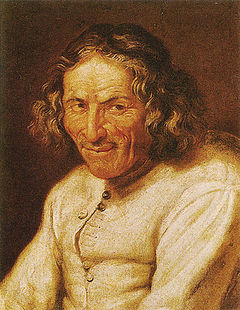
On a trip to Paris in 1662, she met and, at seventeen, married Paul Scarron, a prominent Parisian playwright, novelist, and nobleman “of the robe,” who introduced her to literary society. His plays are among the unremembered from the early days at the Hotel de Bourgogne, but Le Novel Comique, about a traveling troupe of players, defined burlesque as a literary form, and La Precaution inutile inspired Moliere’s Tartuffe.
He was twenty-five years older than his bride, and ugly, crippled and deformed by polio, in constant pain, in need of constant care, which she provided faithfully, religiously, for nine long years, until he died in 1660 (the year Moliere first played the Louvre), leaving her only his name and a mountain of debt.
Among her literary friends was Madame de Montespan, one of Louis’s mistresses, who engaged they young widow to care for their secret love-child, and introduced her to the King, who fell in love with her—not only for her obvious beauty, but for her character as well, her sassy charm, her devotion to God, and most especially, her wise and intelligent counsel. In 1673, she was installed as the Royal Governess to the Dauphin, and became the only person in France who could speak to the King as an equal. In 1680, he rewarded her with substantial wealth and property and the title of Marquise de Maintenon. Whether she became his mistress is uncertain, but her influence profoundly altered the course of history.
A devout Catholic, Louis held to the Gallican belief that a pope’s authority pertained specifically and solely to spiritual matters, while temporal concerns belonged to temporal rulers. Early in his reign (1662) he had declared that faith to be the official state religion—but he tolerated all beliefs. Francoise, however, was a strict and jealous observer, and over time convinced him that all non-Catholics were heretics who, by not following his faith, defied his absolute rule. By 1881, he had constrained the meeting of synods, closed churches, banned Protestant outdoor preachers, prohibited Protestant migration, disallowed Protestant-Catholic marriages, encouraged missions to the Protestants, and rewarded converts to Catholicism.
Otherwise, the King devoted much of his time and energy (and the Royal Treasury) to the development of his Palace at Versailles, and in 1682, he declared it the royal residence and seat of state, requiring all the aristocrats and their retinues (numbering more than 6,000 courtiers) to inhabit the hundreds of luxurious room and crowded quarters, in order to centralize and control his government. This colossal chateaux, luxuriously furnished and fitted with paintings and tapestries, with its three square miles of wooded gardens, their statues and fountains, became and remains the most splendidly ostentatious estate in the world.
It was there, the following year, a few months after the demise of his Spanish wife, that the French King married his Cinderella in a secret ceremony (because of her low birth). She could never be his queen, two year later (1685), at her suggestion, he revoked the Edict of Nantes, unleashing a wave of brutal persecution that proscribed the existence of Protestants, demolished their churches, and forcibly baptized dissenters, sending more than a half million highly skilled Huguenot craftsmen and merchants into exile and effectively crippling the French economy. Resentment of this policy continued through the next century to become one of the major factors leading to the French Revolution.
Denouement
On is deathbed, Louis confessed to his five-year old great-grandson and imminent heir, “I have loved war too much.” His early wars had brought France forth as the leading power in Europe, but in so doing made enemies of all the rest—in the last quarter century of the Louis’s 72-year long reign, France was engaged, first in the Nine Years’ War (1688-97), followed on its heels by thirteen years in the War of the Spanish Succession (1701-14). These wars, along with two great famines (1693-94 and 1709-10) depleted the population and drained the royal treasury. When the the king raised taxes on the poor, they blamed him for all their troubles—he “was the state”—and his reputation suffered.
Then there was the question of succession. Francoise bore no children in their thirty-three-year secret marriage, and only the first of six legitimate heirs survived—dull-witted Louis, le Grand Dauphin, who died long before his father—as did the Grand’s son and heir-apparent, also Louis, le Petite Dauphin—whose eldest, Louis as well, Duke of Brittany, followed suit, leaving only that late Louis’s younger brother, Louis-Auguste, last of the line and only five years old (like the Sun King), to succeed his dying great-granddad as King Louis XV, the Beloved.
Theatrical Aftermath
Moliere’s death in 1673 marks both the climax and the sudden closing curtain of the Golden Age of French drama.
From Corneille through Moliere to Racine is forty years. Aeschylus-Sophocles-Euripides, roughly the same. In sequence, to the peak, and gone. Plautus-Terence-Seneca took 200; still, a trilogy. All reflecting and/or affecting history. Is there a pattern here?
It’s surely no coincidence that 1673 was the year Marquette and Joliet claimed the Louisiana Territory for France and Louis, the Sun King, hooked up with the Widow Scarron.
Without Moliere, his company lost favor with the King and was removed from the Palais Royale in favor of Lully’s Opera, to the Opera’s former Theatre Guenegaud, where it merged with the Marais (likewise lost without Racine) and competed with the old troupe at the Bourgogne (without Corneille) until 1679, when Louis merged them all into the Comedie Francaise we know today, and granted it a monopoly on all spoken drama in French, declaring French Neo-Classicism, with its three greats, superior to the ancients, the perfect models for both comedy and tragedy for all time. To that end, he set about restricting content, style, and structure to his conservative understanding of the Neoclassical Ideal. The troupe responded with the same-old-same-old, playing all three great ones over and over, along with Spanish and Italian plays, the translations of the classics, and clueless, vain attempts to replicate them, but none daring (or able) to deviate, stuck in the rut of past glory.
Exempted from the monopoly were the Opera (sung, not spoken) and the Italian comedia dell’arte troupe lodged now at the Bourgogne. The Opera posed no threat to the Guguenaud, nor it to the other, but the players at the Bourgogne offered bawdy, slapstick, humor in the old medieval style that appealed to the hoi polloi. The Comedie Francaise played mostly to the upper class, and when the court abandoned Paris for Versailles in 1682, the troupe was forced to modify its repertoire to appeal to the working class. A new crop of unremembered playwrights created mediocre tragicomedies with happy endings and “sentimental” comedies—new dramatic forms with one primary goal: to put fannies in the seats. Presenting a moral alternative to the audacity of the commedia troupe, the plays avoided controversy, sex, and aristocratic cynicism in favor of simple, heartwarming, morally uplifting bourgeois entertainment.
Few if any of these plays exist, but the forms persisted and evolved into our tear-jerking melodramas and one-line sitcoms.
Slowly the tide began to turn, as prosperous, middle-aged, Huguenot merchants brought their wives and children to the Guenegaud and piously disparaged the Bourgogne, where the Italians catered to the dark side of decency. This struggle for fannies played good and evil for more than a decade, ending only in 1697, when King Louis righteously expelled the foreign troupe for profane and sacrilegious conduct, leaving only his Comedie Francaise and the Royal Opera legally authorized to perform in Paris.
By this time, however, Louis, under the influence of Francoise, had become increasingly puritanical, giving up his mistresses and other sinful pleasures, attending church instead of theatre; and since most people went to plays to court the king, the Comedie struggled to survive. His purge of the Huguenots drove the bulk of the theater-going public into exile, and his Nine Years War against the Grand Alliance depleted and demoralized the nation.
The Slow Collapse
The eighteenth century began with the War of the Spanish Succession (1701-14) and ended with Napoleon.
The war involved the whole of Europe in ever-changing alliances, with millions of casualties, to determine who would rule not only Spain, but also Hapsburg Austria (or Bourbon France). It dragged on for thirteen years, redrawing the map of the world, all sides exhausting their supplies of money, men, and food—especially in France, where the Great Famine of 1709 sent 600,000 people to heaven or hell. By the time of Louis’s death (1709) his grandson was King Phillip IV of Spain, and France, now ruled (through regents) by young (five-year old) Louis XV, remained the most powerful nation on earth, despite near bankruptcy, a starving populace, and England rising in the west.
Louis XV was a carbon copy of his predecessor without the old man’s savvy. While XIV fought aggressive wars to expand the Empire of France, the new king (through is ministers; he had no gift for diplomacy) struggled defensively to maintain the status quo. His campaigns were disastrous, culminating in the Seven Years War (1756-63) and the loss of New France to Great Britain.
To fund these wars (and his lavish lifestyle) he raised taxes on the lower classes (clergy and nobles were exempt), which squeezed them dry and caused the unrest that allowed the nobility to form a parlement that challenged his absolute authority, best stated in his eerily prophetic aphorism, “Apres moi, le deluge.”
He too, like the Sun King, came to the throne as a five-year old and governed through regents until 1723, when he came of age (thirteeen) and was crowned king. He too was joined in a politically arranged marriage, two years later, to a 22-year old foreign princess, and of their ten children in ten years, eight were girls, and only one of the boys survived, leavibg only the Dauphin (Louis, of course) to engender the last three Bourbon kings and die while the Sun King lived.
Yes, he too had a bevy of mistresses who bore children, until, at thirty-five, he met his Cinderella, in this case a low-born, high class courtesan with a pleasant manner, a knack for intrigue, and a healthy appreciation of the finer things of life. She quickly became both the Marquise de Pompadour and Royal Mistress to the King, and for the next two decades her loving companionship and wise counsel shaped his passions and priorities. Her early death in 1768 (in the middle of the Seven Years’ War) left a hole in his life that he immediately filled with Madame du Barry, another low-born hooker with a noble clientele, whose wild extravagance annoyed the populace.
His fifty-nine year reign is second only to the seventy-two of his predecessor, only down instead of up, the slow collapse of France; its several wars and rebellions, inept and corrupt ministers and advisers, economic crises, religious unrest, an assassination, a rebellious parlement, and the deaths of both his only son and eldest grandson (both Louis Dauphin), leaving France in shambles to his second grandson, Louis-Auguste.
On the plus side, Louis XV appreciated and patronized the arts and sciences—especially architecture and decor—which reinforced the place of France as the cultural center of Europe. He built more colossal buildings than his great-grand, and his Louis Quinze tables and chairs today are priceless. He also collected paintings and sculptures; but his interest in performing arts, aside from grant court festivals, was negligible.
Likewise the reign of Louis XVI, whose enlightened tendencies (religious tolerance, peace among nations, science and art) were no match for the self-serving ambitions of the nobility, the clergy, and his Queen, Marie Antoinette, who would have their privileges. With his help, the Americans won their independence, but he lost the French Revolution of 1789 (and his head to the guillotine in 1793).
During all these years, the Comedie Francaise survived, alongside the Comedie Italienne (the old commedia dell’arte troupe, which Louis XV recalled in 1716), the first struggling to maintain the classic ideal in the face of enormous changes in French culture; the latter playing farce and tragicomedy. The only dramatists of note were Voltaire, whose fifty-eight plays (mostly tragedies), from Oedipe (1718) to Tancrede (1760), rehashed the Greeks and Romans, and Pierre de Marivaux, whose literate comedies embellished on Plautus and Moliere.
The first signs of change appeared in the works of Denis Diderot, whose two plays, Le Fils naturel (The Bastard, 1757) and Le Père de famille (1758), introduced sentimentalism as as a middle point between the strict neoclassic rules of the conservative Academy Francaise and the radical rationalists who would abolish them completely.
Diderot was the controversial mind behind the Enclypede, the 45-volume work that encompassed every branch of human knowledge and launched the Age of Reason. Among its major precepts was the notion that people are basically good, but that associations and institutions lead them astray. It was both secular and moral, and it challenged both church and state.
In theatre, it called for an end to the stark division between tragedy and comedy, relaxation of the unities, a softening of tone, and plots that featured middle class heroes facing everyday problems. The form that emerged was called comedie larmoyant (tearful comedy), a blend of forms that turned tragedy into domestic drames with happy endings and aristocratic satire into comedies that wept for joy.
Note that this transition parallels the trend in England previous half-century, albeit for more organic reasons. Both rooted in church and folk plays, sprouting pioneers (Corneille and the University Wits), blossoming (Moliere and Shakespeare), then wilting to Voltaire and Dryden; both devolve to bourgeois melodrama.
The one great dramatist of that time was Pierre Beaumarchais, whose Barber of Seville (1775) and The Marriage of Figaro (1783) inspired Rossini and Mozart, respectively. Otherwise, the Acadamy resisted these reforms, and friction between the factions built up slowly well into the next century, when Victor Hugo published his manifesto of French Romanticism, absolutely stating that “there are no rules, or models,” and riots broke out on opening night of his Hernani (1830). But that’s another story.
Note that the dramatic conflict between the Academy, whose conservative members ruled the Comedie Francaise, and their enlightened iconoclasts at the Italienne, compares to the widening gap between the Bourbon court and the people of France—both building up for decades and capped by violent eruptions that triggered popular revolutions and toppled institutions; both motivated by the works of Diderot and Thomas Paine.
The Rest of Europe
England’s Charles II, exiled in Paris when Moliere first played the Palais (1660), promoted the French neoclassic example in his patronage of Wycherley and Dryden. Otherwise, the continent was devoid of notable drama throughout most of the 18th Century.
The Italian Renaissance in theatre was over by 1700, its territory overrun and occupied by several foreign aggressors, but its humanism persisted, with the astrological science of Galileo, the baroque sculpture of Bernini, the iconoclastic paintings of Caravaggio, and on stage—in theatres designed and built by the family Bibiena—grand opera (spoken drama was passé). Bibiena innovations in both theatre architecture and scenic art set trends in Vienna, then in Paris, but authors who would otherwise have written plays composed libretti for roughly 20,000 operas by 1800, while only the two Carlos—Goldoni (The Servant of Two Masters) and Gozzi (The Love of Three Oranges)—emerged as dramatists whose works still work.
Significantly, on the other hand, the many French incursions into foreign lands introduced French culture to the courts of the roughly 300 principalities of continental Europe, many of whose rulers used their inferior treasuries in the vain attempt to emulate the art and architecture of the French neoclassic ideal. They too built theatres, where professional French (and English) players (or native amateurs) presented French (and English) plays (or second-rate imitations).
Otherwise, aside from traditional folk plays and farces, Europe north and east of France (including Russia) was theatrically unenlightened until G. E. Lessing, the world’s first dramaturg, joined the new National Theatre in Hamburg (1767) to germinate the German golden age.
Modern Times
Too many factors are involved in the transformation that occured in the western world over the next 200 years to cover in the context of this essay. From the enlightened writings of rational philosophers (and a crumbling aristocracy) came wars, not for land or religious faith, but for bread and freedom; then Napoleon, more revolutions, the rise of the British (and fall of the Spanish, French, Dutch, and Holy Roman) Empires, the Industrial Revolution, Freud, Darwin, and Marx, and the Great Depression, sandwiched between two world wars, at which point the Modern Era ends and Postmodern life on earth begins, with America (vs the Bad Guys) in control.
Rule, Britannia
England, like the rest of Europe, was continually engaged in war throughout the 18th Century, with France her major rival; but while the continental nations fought to expand or protect their homeland borders, England took command of the seas, built a world-wide trading network for its merchants, manufacturers, shippers and financiers, and emerged at the top of the heap, where it remained for all but the end of Modern time.
The Last of the Stuarts
Charles II died in 1685 and left left the throne to his equally libertine brother, James II, a devout Catholic, who was quickly deposed (1688), and his daughter, Mary II (and her cousin/husband, William of Orange), had come to rule English world.
Meanwhile, radical change was taking place in society, as a new “middle” class of merchant citizens arose—predominantly protestant parliamentarians—who protested the King’s divine right and ungodly lifestyle and denounced the theatre on moral grounds, forcing playwrights to soften their tones. Tragedies found happy endings; comedies taught moral lessons; carnal topics were taboo; and all plays aimed to “please and (morally) profit.”
Notwithstanding these concessions, anti-theatre sentiments persisted, culminating in the publication of A Short View of the Immorality and Profaneness of the English Stage (1698), an essay by theologian Jeremy Collier accusing all playwrights (and actors) of profanity, blasphemy, indecency, and undermining public morality through the sympathetic depiction of vice.
The last great playwright of the Restoration—and of the English Renaissance—was William Congreve, whose Love for Love (1695) prompted Collier’s diatribe, and whose masterpiece, The Way of the World (1700), defied it. Both plays rejected the softer style in favor of Wycherley’s hard cynicism, using quick wit, clever irony, and sex to depict a society of sly intriguers, fops, and fools. Amoral and irreverent, these plays exposed hypocrisy and greed among the gentry, and audiences hissed and booed. That said, the latter of the two remains among the greatest of all English comedies.
The Glorious Revolution
The political war between both Charles and James and their several Parliaments officially ended in 1689, when Protestants William and Mary, having accepted the terms of the English Bill of Rights, became the world’s first constitutional monarchs since the Hittites. From that time since, although the crown remained a right of royal (and non-Catholic) blood, it was not divine or absolute; the British government is run by Parliament.
Mary II (co-reigned 1689-94) was the legitimate heir to the throne, who married her cousin William, Prince of Orange, at age fifteen, while he, at twenty-seven (and fourth in line himself), was fighting both the Franco-Dutch and the Anglo-Dutch Wars. The marriage settled the latter, but conflict with Louis XIV continued through the years, at issue the royal lineage: Louis favored the Catholic James II. To preserve the Anglican state religion, the English Parliament deposed King James II and offered the couple the crown, setting off a series of Jacobite rebellions that continued will into the reign of George II.
Mary dutifully submitted to her husband’s rule as he put down rebellious Catholics and resistors and joined the Grand Alliance in the Nine Years War, until she died of smallpox, childless, at thirty-two, leaving him to rule alone.
William (reigned 1689-1702) was a warrior prince, leading his armies abroad from spring to fall, fending off Jacobite plots at home, embroiled in politics and finance fall to spring. He granted land in America (the Carolinas) and, in 1694, chartered the Bank of England, modeled on the Bank of Amsterdam, which laid the financial foundation of the English take-over of the central role of the latter in the global commerce of the upcoming century. And in the year of his death, he intervened in the War of the Spanish Succession (1702-14)—the first of more than a hundred wars and rebellions that involve Great Britain before the century’s end—to kick it off.
More to the point, William was a Calvinist, which, on one hand, assured that the crown remained Protestant, but which—although he converted to the Church of England—troubled the Anglican Tories, especially since he didn’t remarry. (It was rumored he was gay.) More to our particular point, his Puritan bias and bellicose sensibilities included no aesthetic complement, and he refused to subsidize the arts. This forced theater to compete on its own in in a suddenly surging commercial economy, with plays that appealed to the common man of the time, but had no lasting impact.
William’s death led to the crowning of Mary’s sister as Queen Anne —the last of the Stuart monarchs—whose reign (1702-1714) coincided with the North American theater of the War of the Spanish Succession, known in Great Britain as Queen Anne’s War, and in the United States and the French and Indian War. The European battles were waged to decide whether Spain would belong to France or the Holy Roman Empire, and since either option would severely upset the balance of power, other nations joined in, taking sides, England against the French, but arguing for an independent Spain. In the end, the Bourbon grandson of Louis XIV wore the crown, but Spain remained separate from France.
The American war was utterly Anglo-French, with Native American tribes aligned on either side, and resulted in England acquiring Newfoundland and Acadia from France, Gibraltar from Spain, and a 30-year monopoly on the transatlantic slave trade, which brought great riches to the English treasury.
Aside from war, Anne’s reign is noted for significant events that shapes the course of history. The Acts of Settlement (1701) assured the throne would be forever Anglican; the Parliamentary Acts of Union (1709) combined England and Scotland to create the Kingdom of Great Britain, and the 2-party system of government emerged, with the aristocratic Anglican Tories against the common Dissident Whigs.
History has not been kind to Anne, owing mainly to an unflattering portrayal of her in the memoirs of a former confidante and perpetuated in the award-winning 21st Century play and film. While it’s true that in her later life she was obese and ugly, crippled with gout and diabetes, and frequently out of sorts, but she was neither stupid nor unwise.
She conducted affairs of state through her ministers, but her upbringing and inclinations were more liberal than those of her predecessors, and fine art flourished during her reign. In her youth, she studied music (harpsichord and guitar), dance, and acting, and frequently performed; as queen, her court became a cultural center, attracting many of England’s greatest painters, poets, authors, and composers; Queen Anne’s architecture and furniture are name for her. Henry Purcell composed the music for her wedding.
All said and done, Queen Anne presided over an age of artistic, literary, scientific, economic and political advancement that was made possible by the stability and prosperity of her reign.

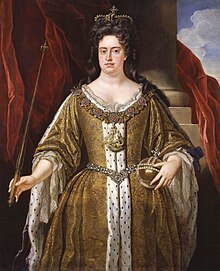
Even theatre packed the houses, although the plays were mediocre. Besieged siege by the puritanic hoi-polloi to clean up its moral act (on stage and off), deprived and censored by King William’s Calvinism, producers had been forced to “soften” their classic repertoires, Under Anne new plays appeared with middle class protagonists and sentimental, black-and-white themes intended to illustrate the essential moral goodness of humankind. They drew large crowds but left no legacy. History remembers only the works of Colley Cibber (The Careless Husband, 1704) and Robert Farquhar (The Beaux’ Strategem, 1709), who authored bourgeois tragi-comedies that, in tandem with similar forms in France, would dominate most of the 18th Century and evolve into the melodrama and burlesque of the next, that emerged as the soap opera and sitcom we know today. The English Renaissance was done.
Enlightenment
The French define the Age of Reason as the time between the death of Louis XIV (1715) and the outbreak of the French Revolution, with roots in Descartes’s startling revelation, “I think; therefore I am” (1637). In England, it begins with the publication of Isaac Newton’s Principia Mathematica in 1687, its roots in Shakespeare and Ben Johnson, and ends with American War for Independence. For dramatic purposes, it’s the Eighteenth Century.
This time is marked by astounding advances world-wide in intellectual and humanistic ideas centered on the sovereignty of reason and the scientific evidence of the senses as the primary sources of knowledge and advanced ideals such as liberty, progress, tolerance, brotherhood, constitutional government and separation of church and state.
It was also a time of a widening gulf between the prosperous and the poor. The vast majority of people (80% or more) lived in poverty and squalor. Royals, clergy, nobles, and the upper-upper middle class enjoyed luxurious lives in luxury, with time and means for education, arts and science, leisure entertainments.
This gulf was nothing new. A century before, there had been no middle class at all—the eighty percent were all slavish serfs. By the end of this one, the shoe was on the other foot, and for the rest of Modern history, the world progressed toward freedom, brotherhood, and equality.
Until post-Modern time, and the Age of Trump. But that’s a later story.
In England, the cultured classes produced and absorbed the enlightened philosophies of Benthan, Berkley, Priestly, Hume, and Adam Smith; the poetry of Coleridge, Worsdworth, Shelley, Keats, and Blake; the novels of Fielding, Defoe, Austin, Holcroft, and Swift; the paintings of Turner, Constable, Hogarth, Reynolds, and Gainsborough; the music of Handel and Purcell; the scientific works of Priestly, Cavendish, and Faraday—among numerous somewhat lesser others. In America, English colonists read Jefferson and Franklin, Hamilton and Adams, Thomas Paine.
The Kings George
Although Queen Anne bore seventeen likely heirs in her forty-nine years, not one survived past infancy, and her since her closest protestant relative was a German second cousin, Georg Ludwig—great-grandson of James I—the English crown fell to the his House of Hanover, where it remains today (renamed Windsor in 1917, for xenophobic reasons).
For more than a century (1714-1837), the both Great Britain and the Electorate of Hanover were ruled by Hanoverian patriarchs who, early on, were more at home in their native land. There, their rule was absolute; in Britain their powers were vastly limited by Parliament.
George I (reigned 1714-27) spoke fluent German and French, good Latin, and some Italian and Dutch, but very little English, and he’d rather have been at home; his government was run by his French-speaking ministers—most prominently Robert Walpole, the nation’s first Prime Minister—and a Parliament of Whigs, who stripped more powers from the throne.
Nonetheless, in spite of early trade wars and Jacobite rebellions, a later economic crisis, the political adversity of his son and heir, a court that ridiculed his flaws, and a population that considered him “too German,” his reign was benevolent; he valued humanist ideals, and encouraged progressive thought.
Not so his successor, George II (reigned 1727-60), for whom the American State of Georgia is named. Depicted historically as a boorish buffoon, he was at his best in battle, first in 1708, at twenty-five, as heir apparent to the Brunswick-Lüneburg Electorate, “distinguishing himself extremely” in the War of Spanish Succession (1701-14); later as King of both England and Hanover, leading his troops against the French in the War of the Austrian Succession (1740-48)—the last English monarch to do take up arms.
His reign also included the last three Jacobite rebellions, The War of the Quadruple Alliance (1717-20), Drummers War (1721-25), the Anglo-Spanish War (1727-29), The War of Jenkins Ear (1740-48), and the French and Indian) War (1754-56), which extended through the Seven Years War (1756-63).
Otherwise, this second George, ill-tempered and besotted, hunted stag on horseback, played cards, and enjoyed the company of his several mistresses, while Walpole ruled the kingdom. He donated the royal library to the British Museum in 1757; he had no interest in reading—nor in the arts and sciences.
Dramatically, for the most part, theatre was simply entertainment.. The Beggar’s Opera (1728), a ballad opera by John Gay, was the most popular play of the century and is frequently performed today, while George Lillo’s The London Merchant (1731) found tragedy in the common man; both pleased the crowds and profited the houses.
Politically, Henry Fielding wrote burlesques (a form of comedy) that savagely satirized society and Walpole’s government (The Tragedy of Tragedies; or, The Life and Death of Tom Thumb the Great, 1731) that so inflamed (and frightened) the Minister that he decreed the Licensing Act of 1737, requiring every new play in England to be read and approved by the Lord Chamberlain before performing it in public—a form of moral censorship that hobbled and autocratically directed dramatic art in Britain for the next two hundred years, until it was repealed in 1968.
Walpole fell from grace and was forced from office in 1742, but during his 20-year tenure, he expanded British interests throughout the world (the first British Empire), extinguished the Jacobite challenge to the Hanoverian dynasty, and established the power of ministers and Parliament in Britain for all time.
The heir apparent to George II was Frederick, Prince of Wales—his polar opposite opposite in every way (a Whig). Charming, temperate, tolerant, peace-loving, intellectually enlightened, and enthusiastic patron of the arts and sciences—had he outlived his father, the world might be a better place today. Alas, he didn’t, and the crown fell to his eldest son, whose ensuing 60-year reign (1760-1820) stands as the longest of any male English ruler ever; only Queens Victoria and Elizabeth II, exceed him, and he barely exceeds Elizabeth I.
King George III, by the age of eight, could read and write in both English and German, and comment on political events of the time. He was the first British monarch to study science systematically. Apart from chemistry and physics, his lessons included astronomy, mathematics, French, Latin, history, music, and geography.
He came to the throne in the middle of the Seven Years’s War, which won New France and Spanish Florida, and instituted fiscal reforms that made him popular throughout most of his reign, despite the loss of his American colonies in 1783. He was atypically a frugal and highly moral king, unlike his father; he never had a mistress. His time is marked by the addition of Ireland to Great Britain, the birth of the Industrial Revolution, the Napoleonic Wars, the War of 1812, the transportation of 1.6 million slaves out of Africa to British colonial possessions, and at least four prolonged periods of psychotic behavior, which earned him the nickname Mad King George.
Theatrically, with only two delightful exceptions, the repertoire remained the maudlin same. Oliver Goldsnith (She Stoops to Conquer, 1773) and Richard Brinsley Sheridan (The School for Scandal, 1777) revived Restoration comedies of manners with a moral twist, and stand up well today. Sadly, they had no followers, and life dramatic art was mediocre for the next 100 years.
Playhouses
From the Restoration of Charles II in 1660 through the early reign of George II, the patents granted to Davenant and Killigrew remained in force, sometimes as one company, then as two, playing at Lisle’s Tennis Court (until 1705) and Drury Lane; then at Dorset Garden (1671-1709), The Haymarket (from 1720) and Covent Garden (1732). From 1737, only Drury Lane and Covent Garden were licensed to play drama—until 1766, when The Haymarket was permitted to play in the off season (Mid-May to Mid-September).
[Note that although both Drury Lane and Covent Garden were twice destroyed by fire and rebuilt, greatly enlarged, and upfitted, and The Haymarket has undergone two major reconstructions, these three monuments remain on their original sites, the heart and soul of London’s West End.]
Anyone with sixpence could attend, from royals to the hoi-polloi, and many did, although the bill of fare was rarely the main attraction. Those who weren’t distracted—flirting, buying and selling, being seen—were cheering, clapping, booing and hissing, interjecting, sometimes taking sides—or protesting, with placards and noise-makers, some with rotten fruit and vegetables; suddenly there’s a duel—or a brawl.
Theaters at that time were the preferred venues for popular indoor disturbances. History notes the Old Price Riots of 1709, on opening night of Macbeth in the brand new second Covent Garden to protest a penny rise on a the price of a sixpence seat, that lasted for sixty-four days. Although they didn’t happen often—one or two a year between in London between 1730 and 1780—there was always the risk, for reasons ranging from price of a seat to a quarrel between actors and their flocks of devotees, to the moral, social, political, or religious content of the play, or the quality of its production. Rarely were they violent, nor did they significantly affect the status quo, but they suggest to the enlightened mind the social sensibilities of the audience. Gentle Riots? is a lengthy but but engrossing thesis on the theater as the place for social protest.
No wonder actors of the time declaimed—they had to, to be heard.
Maybe it’s for all these reasons (and the law that said the company owned the playwright’s work) that so few great plays came from all those many years.
By 1800 all three patent theaters had been enlarged to seat as many as 3,000 patrons, but London was now the world’s largest city, with over a million inhabitants, many of whom were ripe for entertainment. The government relaxed its rules, and over the next four decades, eighteen more were constructed, all playing melodramas, bowdlerized Shakespeare, and, late in the century, the operettas of Gilbert & Sullivan.
Theatre in the Colonies
In the early 16th Century, Spain and Portugal brought church plays to Latin and South America and used them to convert the heathens. The first North American play was written in New France in 1606, before it became part of New England, where plays were forbidden. The first recorded performance of play in what would become the United States, however, was in 1665, when three men in Virginia were hauled into court for performing a (lost) playlet, “Ye Bare and Ye Cubbe,” and with rare exceptions, another seventy-five years passed by before the next.
Early in the 18th Century, unrecorded but quite likely, were a few small groups of amateurs who put on plays, first in the south, in Williamsburg (where the first colonial theatre was built in 1716) and Charleston, then Philadelphia and New York (the first American play, published in 1714). Alas, John Wesley and George Whitefield arrived on the scene in the 1730’s, preaching revivals in the First Great Awakening, followed by the Revolution, and the dramatic spark sputtered.
In 1749, one such group formed the Murray-Keane Company in Philadelphia and played until the audience played out, then moved on to New York, then to various towns in Virginia and Maryland, before it vanished from history in 1752—the very year Lewis Hallam arrived in Williamsburg from England with his small troupe of third-rate professionals.
Like Murray-Keane, the Hallam Company played to (and played out) audiences in Charleston, Philadelphia, New York, until they were themselves played out, and in 1755 they sailed off to Jamaica (where plays had been performed since the early 1680’s) to join the company of first-rate actor-manager David Douglas. When Hallam died, Douglas married his widow, the two groups merged into The American Company and, in 1758, returned to the mainland, where they played until the Revolution. They staged the first professionally-produced American play (Thomas Godfrey’s The Prince of Parthia, 1767) and built not only the Southwark Theatre in Philadelphia—the first substantial permanent playhouse in America—in 1766, but also the John Street Theatre in New York (1767) and others down the coast to Charleston.
Note that this is the only professional company ever to play the Colonies. Performances were forbidden by law in many states in the wake of the Great Awakening, and while a few colonial amateur dramatists provided a variety of patriotic plays excoriating British rule, they are remembered only for their fervor—and their coinciding with the German Sturm und Drang.
The Continental Congress banned all performances in 1774, and the company retired to Jamaica for the duration of the war, to return a decade later as the The Old America Company in the John Street Theater, where they played for twenty years.
Aside from being the first of their kind, these companies were simply dull flashes in the pan. The first truly professional theatre in the New World would play in the US of A.
The German Enlightenment
Throughout the 18th Century and well into the next, despite its slow collapse, France remained the most powerful nation in continental Europe, and all the others aspired to follow her example, in fashion, architecture, art, government, you name it—for over a hundred years. French was the language of the culturally elite. Consequently, after the French revolted (and after Napoleon), the mimicker princes all fought their own bloody Revolutions of 1848, after which Otto von Bismarck, Prime Minister of Prussia, united all the principalities and claimed the top of the hill for the new German Empire (1891).
The stage was set, however, by Frederick the Great (1740-86), whose enlightened diplomacy consolidated the various states of Prussia and whose patronage of the arts paved the way for the next major movement in dramatic literature.
Sturm und Drang
It begins in Hamburg with a brief burst of plays by a group of young literary revolutionaries, the sole intent (and only similarity) of which was the flat rejection of the Academie franciase and all it stood for. Generally described as Sturm und Drang (storm and stress)—the title of one of the early (1776) plays—they splintered off in all directions, both in style and structure, although all spoke to the tumultuous times. Very few were produced—fewer still successfully—and with no common elements, they never coalesced into a movement; but all were widely read and discussed for their radical points of view, and two of its authors, Johann Wolfgang von Goethe (Goetz von Berlichingen, 1773) and Friedrich Schiller (The Robbers, 1782) later achieved universal greatness.
It’s more than mere coincidence that these plays were written during the American Revolution; several, including Sturm un Drang (1776) are set in the colonies, and argue for independence. Their attitudes began to seethe among the lower classes.
Lessing, Goethe, and Schiller
Before the 18th Century, there was no German drama. English companies had toured the continent playing Shakespeare as early as the 1580’s (until the Thirty Years War), after which princes and aristocrats engaged French troupes to play Moliere. What passed for public theatre was a hodge-podge of serio-comic sketches featuring Hanswurst, the clown.
The first indigenous German dramatist was Johann Christoph Gottschedd, who joined the company of Caroline Neuber in 1727 to banish Hanswurst and create a public audience for his pedantic German versions (and imitations) of the Frenchies, in Leipzig and on tour. Sad to say, the public wasn’t ready. Hanswurst reappeared, the plays revised to make ends meet, and the new drama floundered and fizzled.
The first significant German dramatist—and the world’s first dramaturg—was Gotthold Ephraim Lessing, whose play, Miss Sara Sampson (1755), was a sentimental bourgeois tragedy that made him famous. Over time, he realized that English drama was the more suitable model for German writers, and articulated his reasoning in Die Hamburgische Dramaturgie, a series of essays and critiques that coincide with his tenure at the short-lived Hamburg National Theatre (1767-69). Through them, he foretells the rational mix of Sturm und Drang and Shakespeare with Germanic national overtones that opened the door to Romanticism. He puts proof in the pudding with Minna von Barnhelm (1767)—Germany’s first national comedy—and his masterpiece, Nathan the Wise (1779), which pleads the case for religious tolerance, is considered the greatest philosophical drama of the century.
Johann Wolfgang Goethe (1749-1832) is the German Shakespeare. His novel, The Sorrows of Young Werther (1774), was the catalyst for the Sturm und Drang experiment, and the success of his play Goetz von Berlichingen made him, at twenty-four, the most famous young writer of his time. in 1776, he was summoned by the enlightened young Karl August, Duke of Saxe-Weimar, to join his privy council, where he served simultaneously as Commissioners of War, Mines, and Highways, and chancellor of the Exchequer. He was de facto the duchy’s Prime Minister, friend and confidant to the Duke, the public face of Weimar, and a major voice in its blossoming culture.
He also oversaw construction of the ducal theatre (1780) and led a group of amateur actors that provided the town’s only theatrical entertainment—until 1784, when a third-rate professional troupe leased the theater and remained in residence for seven years.
Meanwhile, three years in Italy (1786-88) persuaded him to abandon Sturm und Drang for a new approach to ancient Greek plays, based not on neoclassic rules and dictates, but on the underlying dramatic Gestalt, exemplified in his adaptation of Euripides’s Iphegenia in Tauris (1787). This first “Weimar” tragedy used Greek mythology to depict humanity’s ethical evolution from a narrow concern for self to an awareness of broader claims, and is often considered one of Goethe’s greatest achievements.
He returned to Weimar with a vision but no time, and his new play slipped into and among his many other obligations and interests. In 1791, Karl August appointed him to manage the Weimar Court Theatre, but he engaged a mediocre company, delegated an actor to direct, and enlisted under his Major General friend in the Prussian wars against the French Revolution, engaged in the Battles of Valmy (1793), Pirmasenz, and Kaiserslautern, and the Siege of Mainz (1794).
Then he hooked up with Schiller, and together they made history.
Friedrich Schiller is the Father of Romanticism. The son of a soldier, born in Wurttemburg during the Seven Years War, he was raised to become a priest but sent to military school, where he studied medicine—and wrote The Robbers. Posted at twenty-three as regimental doctor in Stuttgart, he left without leave to attend the premiere performance of his play, which which made him famous overnight, but for which he was imprisoned and forbidden to publish more plays. Defiantly, he deserted to Mannheim, assumed the role of resident dramatist of the state theatre, and wrote two highly successful but unmemorable Sturm und Drang-style moral tragedies. From there he found a wealthy patron in Leipzig and, like Goethe, turned to the past for inspiration—not to the Golden Age of Greece, but (following Lessing’s lead) to 16th-Century England. In 1787—the same year Goethe wrote his Iphegenia—Schiller produced Don Carlos (1787), a historical drama written in (Shakespearean) five-foot iambs with romantic overtones.
Curiously, both playwrights put their breakthrough plays aside for a decade to pursue other interests—Goethe writing poetry and prose, serving Karl August, fighting the war; Schiller studying the history of Europe, achieving fame with books on the Netherlands revolt and the Thirty Years’ War.
Although both won fame at early ages (Goethe at 24, Schiller 23) as leaders of Sturm und Drang, they weren’t contemporaries. The former was a decade older—his Goetz broke the ground in 1773 (when Schiller was fourteen)—and his fame and influence in Weimar were well established when the young doctor went AWOL to Mannheim for the opening of The Robbers in 1782. Each was aware of the other’s work, however. Goethe recognized the genius of the man whose work his had inspired, and was instrumental in Schiller’s appointment in 1789 as professor of history at the University of Jena, just twelve miles from Weimar. But five more years would pass before they met and bonded, became friends and allies in a project to establish new standards for literature and the arts in Germany.
The Weimar Court Theater
Volumes have been written on the synergy of these two literary lions—their vastly different temperaments, their violent arguments over conflicting theories; the rational Goethe, the emotional Schiller, both humanists with a common goal, each influencing the other, as the lower senses (feelings) colored Goethe’s classicism and Schiller gave romanticism humanistic cause, and together they established the Weimar Theatre as the leading playhouse in Germany. From the time they met (1794) until Schiller’s early death (1805), their company produced an impressive mix of plays from every place and time, from the Greeks and Romans to Shakespeare and Moliere, including a few of their own—Goethe in his Classical mode (Egmont, 1788), Schiller the Romantic (William Tell, 1804).
Strictly speaking, the two movements were poles apart. the one based on the rational thought, balance, order, and harmony of the ancients; the other on emotional feeling, imagination, nature, and raw instinct, with Gothic German themes. In practice, the line between the two was muddled, and in the long run, both movements merged into 19th Century melodrama; but Romanticism, with its nationalistic themes and overtones, had more impact on the course of history.
Schiller’s death resulted in Goethe’s loss of interest in theatre, although he continued to manage the Weimar Court until 1819. His last (and only other) play was Faust, his immortal masterpiece, Part I published in 1808; Part II in 1832—the year of his own demise.
German Romanticism spread spread over Europe—first to England, where the Romantic poets (Coleridge, Wordsworth, Shelley, Keats, and Byron) all wrote literary dramas (few of which were ever played)—then to France, where Hugo’s Hernani caused riots in 1830, after which—unlike Romantic music, art, poetry, and prose—Romantic drama as a movement fell apart. Throughout the rest of the 19th Century, playwrights either churned out melodramas for the masses or groped their way into the future, sowing the seeds of Modern Drama.
The Victorian Era
The 19th Century began with the Napoleonic Wars, moved through the Victorian Era (1837-1901) and the Industrial Revolution to La Belle Epoch in France and the Gilded Age in the U. S. Too much happened in the world to tackle here. (See Wikipedia: The 19th Century.) In a nutshell: The Industrial Revolution, with its factories and locomotives, electric lights and telegraphs, transformed life in the west from the horse-drawn to the horseless carriage and spawned dozens of the world’s great authors, artists, and composers. Germany united; The Holy Roman Empire became Italy and Austria; Spain and Portugal lost South America; Russia reared its ugly head, and America freed the slaves. By 1900 every country in Europe except Russia had some form of constitutional government, and Great Britain, under Queen Victoria, controlled a fifth of the world’s territory, and a quarter of its population.
In general, the time is characterized by optimism, regional peace, economic prosperity, an apex of colonial empires, an exploding middle class population, and a deluge of technological, scientific, and cultural innovations.
Theatrically (ironically), while attendance was higher then than at any time before or since, the plays people saw were mostly maudlin melodramas, with elaborate special effects but flimsy plots and shallow characters—or bowdlerized versions of old favorites. The next major development would not begin until the end of the century, in Norway (of all places), with roots in Russia.
French Melodrama
The first use of the French word mélodrame was to signify a dramatic piece of music; ergo, the melo in melodrama actually implies drama with music—originally a spoken monologue; then a play with songs. The first use of the word in English was to describe Thomas Holcroft’s A Tale of Mystery (1802), based on a play by Pixérécourt, who wrote more than 200 best-forgotten mélodrames during in his 40-year career in Paris. But the form first found its shape in Prussia, with as many “sentimental” plays by August von Kotzebue, first produced (reluctantly) by Goethe at the Weimar Court, then all over Europe. By 1800, he was the most famous playwright in the world.
The most prolific of them all was Eugene Scribe, whose more than 300, while extremely popular, lack fine language, depth of character, thought, or social analysis, to the extent that Théophile Gautier questioned how it could be that “an author without poetry, lyricism, style, philosophy, truth or naturalism could be the most successful writer of his epoch, despite the opposition of literature and the critics?” His claim to fame was his formula for the “well-made” popular play that, adapted over time, remains the way plays work today.
In a nutshell: plays should be about the bourgeoisie, the characters involved in elaborate plots featuring clever twists and turns, usually centering on a misunderstanding revealed early on to the audience, but not realized by the protagonists until the final scenes. They face a series of physical and moral obstacles, the resolution of which may create in turn further problems. At the end, startling revelations lead to a sensational denouement. Sound familiar?
So successful were his plays that others copied his example, following his formula, churning out well-made melodramas all over Europe and America for the rest of the 19th Century. Feel-good tragedies with happy endings. That’s where the money was. (And they passed the censors.)
Suffice it to say, dramatic art had little lasting impact on the time. One significant exception is the stage adaptation of Uncle Tom’s Cabin which, according to Abraham Lincoln, lit the fuse that started the American Civil War.
Bowdlerized Shakespeare
Along with melodrama, but less often, came the classics, sanitized to suit the censors, played by star actors in declamatory style. Victorian morality prompted adaptations of the classics that excluded inappropriate references. Thomas Bowdler’s The Family Shakespeare (1807) rewrote all 36 plays omitting sexuality, profanity, and political implication; Nahum Tate’s melodramatic King Lear featured a happy ending.
Modern Drama
From the end of the Franco-Prussian War (1871) until the beginning of World War I, most of the western world was stable, peaceful, prosperous, progressive, rational, trusting in the future. During these years, known in France as La Belle Epoque (in England, Pax Britannica; in the US, The Gilded Age), arts and science flourished, technological inventions flooded the patent offices, all funded by growth capitalism. For the upper classes, life was a bowl of cherries.
The working classes, on the other hand, were exploited and abused, in growing poverty and squalor, as vividly described in the prose works of Charles Dickens and Victor Hugo. They, along with Darwin, Marx, and Freud (and from them Ibsen, Strindberg, and Chekhov), promoted rational thought, scientific truth, and social justice, and turned the world upside down.
Theatrically, the shift was seismic. All the old forms dramatic forms (and acting styles, scenic arts) were swept into a corner reserved for old chestnuts and replaced with revolutionary Realism and (its ugly twin) Naturalism—forms that essentially remain the mainstream mode today. Almost at once reaction triggered Symbolism, Expressionism, Surrealism, and a host of other innovative “isms” that have sprung up since and had their day, then merged with others over the years until it all became an eclectic blur.
Realism
Before this time, dramatic art had always been, by definition, artificial; a play is a work of art. Written as poetry since the Greeks and played in artificial settings according to artificial conventions (audience asides, presentational monologues, deus ex machina; sometimes wearing masks). The acting style was larger than life and loud enough to be heard over a restless crowd. One thing about a realistic play: one has to listen.
The realists abolished artifice in favor of real life on stage, down to the slighted detail, and for the first time, audiences witnessed actors playing ordinary people going about their everyday lives as though there was no audience, behind the “fourth wall” of the proscenium arch.
As with all the dramatic ages since the Greeks, Realism came about because of historical circumstances and events, reflected attitudes regarding them, and substantially affected the subsequent state of human affairs. Details of these parallels are the subject of a future essay. In a nutshell (in this case), Darwin, Marx, and Freud applied the recently formulated scientific method to their studies of the origins of species, the working class, and the human mind, and published their findings for an increasingly literate public to absorb. Their proofs and theories brought the world face to face with scientific reality, and changed they way people understood the world and humankind.
For now, just note that (1) all creative movements occur at the golden peaks of their cultural times; that (2) so far they seem to produce great playwrights in threes or fours; and that (3) in this case, a simple sound effect—”The Closing Door Heard Round the World” as the curtain fell on the opening night of Ibsen’s play, A Doll’s House (1879)—ignited international controversy on the issue of women’s rights.
The Early Russians
In 1702, Peter the Great imported a French company of actors and built a theater in his campaign to “westernize” Russia, and for the next 100 years, sporadically, neoclassic translations and (later) Russian adaptations were performed in court theaters by French-trained serfs. The first Romantic challengers were Alexander Pushkin (Boris Gudenov, 1825) and Nikolai Gogol (The Government Inspector, 1836). Then, for a cluster of subtle social reasons, Ivan Turgenev (A Month in the Country, 1850), Alexander Ostrovsky (The Storm, 1859), and Leo Tolstoy (The Power of Darkness, 1886) tempered the romantic, not with melodrama, but portrayals of real people, paving the way for Anton Chekhov and the scientific “method” acting of Konstantin Stanislavsky.
The Scandinavian Fathers
Serious drama first appeared in Scandinavia in the early Romantic plays of Norway’s Heinrich Ibsen (Peer Gynt, 1867) and Sweden’s August Strindberg (The Outlaw, 1871), both of whom in later years abandoned that form to write plays that would revolutionize dramatic art world-wide.
Ibsen is recognized as the Father of dramatic Realism. He authored a dozen realistic dramas, all addressing universal social issues of the time, from marital abuse (and syphilis) in Ghosts (1881) to corruption and greed (An Enemy of the People, 1882)—so shocking that the powers that were suppressed their production for two decades—but they were published, widely read and talked about, and spread all over Europe in several translations, inspiring a cluster of followers whose works challenged the status quo and defined Modern drama.
Strindberg became the Father of dramatic Naturalism, with The Father (1887) and Miss Julie (1888), among others. Of his more than sixty plays, only a few are naturalistic; others are historic, religious, chamber plays, and most famously, his “dream plays” (The Ghost Sonata, 1907), inspired by the works of Freud. Both dramatists were heavily influenced by Freud, as well as Marx and Darwin, but Ibsen is more socially inclined; Strindberg knows only the fit survive.
The line between Realism and Naturalism is fine and flimsy. Essentially, the former sees the world as it is; the latter digs into the (typically) sordid reasons why. It sees a play as a “slice of life,” taking place in real time, with no creative manipulation; while Realists cling to the artifice of the well-made play, if realistically portrayed. In practice, the Naturalist reveals a darker, more decadent world than the positive realist. The Father drives himself (or is driven by his wife) insane with doubt regarding their son’s paternity. Although others followed Strindberg’s example, with some controversial success, the trend was never popular, and it never became a viable movement.
Theatre Libre
Simultaneously, in Paris, Emile Zola developed his own nouvelle formule for drama, described in the preface to his dramatization of his novel, Therese Raquin (1873) and expanded in the essay, “Naturalism on the Stage” (1881). Neither his play nor those of his few disciples attracted notice, however, until André Antoine, endorsed by Zola, opened the Théâtre Libre (Free Theatre) in Paris (1887). Organized as a private club, it was exempt from censorship, and he began producing plays the boulevard venues couldn’t—e.g. Ibsen and Strindberg. It was he who emphasized strict attention to realistic detail in all aspects of production, standardized the convention of the “fourth wall,” and when Fernand Icre’s The Butchers (1888) called for sides of beef on stage, reality prevailed.
The Movement Spreads
Antoine’s example was quickly followed by the Freie Bühne in Berlin (1888), the Independent Theatre in London (1889), and others, featuring the works of Gerhart Hauptmann in Berlin (The Weavers,1892) and George Bernard Shaw (Mrs Warren’s Profession, 1893). Hauptman was a flash in the pan, but Shaw wrote more than sixty intellectual comedies on social issues, many of which remain in today’s repertory (and among the greatest ever written). Their impact on the course of modern history is significant.
Meanwhile, a decade later, Stanislavsky founded the Moscow Art Theater (1898) and applied the scientific method to the art of acting, presenting the works of Chekhov and Maxim Gorky (The Lower Depths, 1902)—and later still (1904), the Renaissance finally reaches Ireland as the Irish National Theatre Society at the Abbey Theatre in Dublin, producing the poetic-mythic symbolism of W. B. Yeats and the morally condemned realist works of J.M. Synge (Riders to the Sea, 1904).
Of these several luminaries, Chekhov stands out, along with Ibsen and Strindberg, as one of the three seminal figures in the birth of early modernism in the theatre. His four major plays—The Seagull,(1898), Uncle Vanya (1899), The Three Sisters (1901), and The Cherry Orchard (1904)—explored a withering aristocracy, his characters clinging to the past as he presaged the Russian Revolution. They also served as a platform for the Stanislavsky Method of acting still widely used today. Essentially, quite simply, the actor endeavors to “recreate and express—realistically—how people truly act and speak with each other to reflect the human condition as accurately as possible—a “mirror up to nature”—to inspire the audience to reflect upon their own definition of what it means to be human.
Anti-Realism
No sooner had Realism eclipsed all the old dramatic forms than a Pandora’s box of anti-realistic alternatives cropped up all over Europe, beginning with German Expressionism (B. F. Wedekind’s (Spring’s Awakening (1891) and French Symbolism (Maurice Maeterlinck’s Pelleas and Melisande, 1893); then Oscar Wilde’s Art for Art’s Sake (Salome, 1893), Alfred Jarry’s unique Ubu Roi (1897), W. B. Yeats’s reactionary poetic-mythicism (Cathleen ni Houlihan, 1902), French Surrealism (Guillaume Apollimaire’s The Breasts of Tiresias, 1903), and others between the two World Wars—Luigi Pirandello’s cryptic Iconoclasm (Right You Are, if You Think You Are, 1917), Italian Futurism and French Dadaism (1920’s; no significant literature), Federico Garcia Lorca’s poetic Fatalism (Blood Wedding, 1933), Jean Giraudoux’s anti-Nazi satire (The Trojan War Shall Not Take Place, 1935), Bertolt Brecht’s presentational Epic Theatre (Mother Courage and Her Children, 1938), Antonin Artaud’s Theatre of Cruelty (theory 1938; no plays), Jean Anouilh’s subtly resistance drama (Antigone (1943), and Jean-Paul Sartre’s Existentialism (No Exit,1944), which with Albert Camus’s essay on The Myth of Sisyphus, paved the way for the Theatre of the Absurd.
Add to these the evolution of musical theatre, from English ballad opera (John Gay’s The Beggar’s Opera) and French mélodrame to Broadway’s Oklahoma! (1943), from there to the magnificently extravagant spectacles of today, a few of which urge social action; otherwise, while they please—preferred by far by the public—they rarely profit anyone but the producers.
All of these diverse dramatic forms shared one thing in common—a rejection of dramatic realism. Not one found a popular audience, and soon faded into history, but all contributed elements to what ultimately became the complex, eclectic, and creative amalgamation that exists today.
Even Realism paled at first in comparison to the insignificant but extremely popular bourgeois melodramas, sentimental comedies and farces, and grand and ballad operas that pervaded English, French, and Italian theaters—their golden ages in the past. These forms all continued to be played as classics from the old days, but new plays adapted to the new reality. As the Twentieth Century turned, the era of bluster was over, and Realism reigned.
Along with Musical Comedy.
But that’s a later story.
The American Century
NOTE: The remainder of this narrative deals primarily with theatre in the United States, although significant happenings in other nations are addressed as they pertain to the human art.
Immediately after the American Revolution, theatre in the new United States began to thrive; within ten years four companies were touring the eastern seaboard. After the War of 1812, the exploding population migrated west, and by the end of the 19th Century, every major town and city from Boston to Sacramento had at least one “opera house” (more than a few on Broadway), with professional companies in residence or riding the rails on tour, playing on riverboats.
The early companies were simply imitators of the London stage, with English actors playing English plays. The first American playwright of historical note was Royal Tyler, whose comedy, The Contrast (1787), introduced the stereotypical Yankee character. Others followed over time, a few extremely popular, but very few enduring. Native actors rivaled British stars and toured The Drunkard (or Macbeth) to sellout crowds (or not) all over. Plays about the Common Man, the Noble Savage and Jim Crow were popular, but the only lasting theatrical innovation was the minstrel show.
Sadly, and ironically, the whole of 19th Century theatre is embodied in and triggered by the night of April 14, 1865, when an actor from a family of actors, John Wilkes Booth, went to the Ford, where President Lincoln was enjoying a performance of British playwright Tom Taylor’s Our American Cousin (1858), and committed the crime of the century.
Otherwise, although theatrical entertainment was abundant and very popular—and more and more spectacular, its stars celebrities—the plays were crafted to appeal to the masses, and are considered less than mediocre. At is peak, six names emerge as authors of successful melodramas: Augustin Daly (Under the Gaslight, 1867), Steele McKaye (Hazel Kirke, 1878), Bronson Howard (Shenandoah), William Gillette (Secret Service, 1895), James A. Herne (Margaret Fleming, 1890), and David Belasco (The Girl of the Golden West, 1905). Their well-made plays play well today, if played well, and many were made into movies.
In 1912, emulating the “free theatre” trend in Europe, a group in Boston (of all places) formed the Toy Theatre to stage amateur productions of new plays and launch America’s ”Little Theatre” movement. Within five years there were 50 such “Little Theaters” in cities nationwide.
Eugene O’Neill
The first significant and arguably the greatest ever American dramatist, O’Neill’s first two Broadway plays—Beyond the Horizon (1920) and Anna Christie (1922)—won Pulitzer Prizes for Drama and opened the door for American realism, while he went on to explore and experiment with a wide variety of dramatic forms and genres—expressionism (The Emperor Jones, 1920; The Hairy Ape, 1922; All God’s Chillun Got Wings, 1924), naturalism (Desire Under the Elms, 1924; The Iceman Cometh, 1944), symbolism (The Fountain, 1922), surrealism (The Great God Brown, 1926), autobiographical family comedy and gritty drama (Ah, Wilderness, 1933; A Long Day’s Journey into Night, 1941), Noh drama and the Bible (Lazarus Laughed, 1926), Greek tragedy (Mourning Becomes Electra, a trilogy, 1931), and a 9-act Freudian marathon (Strange Interlude, 1928) in which characters in conversation express their unspoken thoughts as “interior monologues.”
Everything that’s happened in American dramatic art began with him.
His father was the actor James O’Neill, the model for James Tyrone in his autobiographical Long Day’s Journey, who “played Iago to Edwin Booth’s Othello” and vice versa. He bought the rights to Charles Fechter’s dramatization of The Count of Monte Cristo (1868) in the early 1880’s, claimed the title role, and famously toured the nation for thirty years—more than 6000 performances. His career coincided with and represents the apex and the end of melodrama’s century-long appeal. His son launched the American Century.
His early life, as told in Long Day’s Journey (and imagined, romanticized, in his only comedy, Ah, Wilderness!), was complicated by his Catholic family—alcoholic father and older brother and a morphine-addicted mother—and his own tuberculosis (and his guilt). Born is a trunk, as the saying goes, in the Barrett House Hotel on Times Square, he spent his preschool years “on trains and in hotels,” after which he went to Catholic schools. At nineteen, expelled from Princeton, he worked briefly as a secretary for a mail order house in New York, then sailed off to prospect for gold in Honduras. No gold, but he caught malaria.
During the next five years, he wandered home to manage a theatrical tour, act on the vaudeville stage, and report for the New London Times; then sailed back to work for Westinghouse, Swift Packing, and Singer Sewing Machines Companies in Buenos Aires, to wind up full time as an able-bodied seaman on the transatlantic American Line. He captured these years at sea in several of his early one-acts (“Bound East for Cardiff,” 1914).
In 1912, he spent six months in a sanitorium, fictionalized in The Straw, 1919, where he made the decision to become a playwright. He studied for a year with George Pierce Baker at Harvard, then joined the Provincetown Players (1916), where most of his early one-acts were produced. In 1918, Beyond the Horizon was produced on Broadway, and won the first of his four Pulitzer Prizes.
The rest is history.
The Best of the Rest
Scores of other playwrights followed his motley examples during both the Roaring Twenties, as people flocked to theaters all over the country. In the 1927-28 season alone, well over 250 plays appeared on more than 70 legitimate Broadway stages—the most ever, before or since—and although none equaled those of Gene O’Neill, many became modern American classics that influenced the Great Ones after WWII.
One early incubator of American dramatists was the Theatre Guild (1919-present), a major force in Broadway theatre well into the 1970’s and currently producing tours of Broadway musicals. Between the wars, it introduced Maxwell Anderson (What Price Glory?, 1924), Sidney Howard (They New What They Wanted, 1924), William Saroyan (The Time of your Life, 1939), and Phillip Barry (The Philadelphia Story, 1939), among others, and produced several by O’Neill.
Equally influential in the ’30’s was The Group Theatre (1931-41), founded by Harold Clurman, Cheryl, and (most famously) Lee Stasberg, featuring works by Paul Green (In Abraham’s Bosom (1926), Sidney Kingsley (Men in White, 1933), Irwin Shaw (Bury the Dead, 1936), and most famously, Clifford Odets, whose agit-prop drama, Waiting for Lefty (1933), based on a New York City taxi drivers’ strike, argued for a communist society, got 28 curtain calls on opening night, and ran for 144 performances.
Add to this list Thornton Wilder (Our Town, 1938), Elmer Rice (The Adding Machine (1923), George S. Kaufman and Moss Hart (You Can’t Take It With You, 1937), Robert E. Sherwood (Idiot’s Delight, 1936), Lillian Hellman (The Children’s Hour, 1934), and four female Pulitzer Prize winners: Zona Gale (Miss Lulu Bett,1921), Susan Glaspell (Allison’s House, 1931), Zoë Akins (The Old Maid, 1935), and Mary Coyle Chase (Harvey, 1945).
Early in the Great Depression, dissident elements of the Little Theatre movement coalesced into the New Theatre League, presenting plays written and performed by working class amateurs that expressed the hardships of peoples lives and leaned toward Marxian solutions. The leading company was the Theatre Union, which produced Tobacco Road (1933)—the only play worth noting—a naturalistic, muckraking mix of “impure, adulterous sex and blasphemous, profane, elemental comedy” set in poverty-stricken backwoods Georgia that so shocked and lewdly entertained the public that it ran for eight long years—3182 performances—second only to Clarence Day’s Life with Father (1939) as the longest-ever run of a straight (non-musical) Broadway play. By the time it closed, the Union had failed (1937) and the League dwindled into obscurity.
In 1935, the suddenly socialist FDR government created the Federal Theatre Project to pay 10,000 persons in 40 states—including African-Americans—to stage 1000 theatrical productions, 65% presented free of charge, but the project is best known for developing the “Living Newspaper,” in which the universal “little man” raises questions on a social issue, and the facts are acted out. So left-wing radical were these productions that conservative congressmen were alarmed, and two years later—four days before the opening of Marc Blitzstein’s The Cradle Will Rock two years later (directed by Orson Wells) about a union organizer, they withdrew funding and padlocked the theatre. Two years after that, the House Committee on Un-American Activities found cause to curtail the project altogether.
For all these noteworthy playwrights and their excellent body of work, the number of Broadway productions fell sharply during the Depression, from the high in 1927-28 (over 250) to 80 in 1940-41. In part (of course) it was because the public had no money to buy tickets, but a more insidious reason was a cheaper, newer—and perpetual—form of entertainment.
The Movies
In 1930, more than 65% of the American population went to the movies every week. This portion dropped to 40% during the Depression, but climbed back to 60% during World War II. This new craze left the Wholly Human Art suddenly in the lurch and struggling to survive. By 1950, there were only 30 Broadway theaters, only150 (semi-) professional companies in the entire United States.
The argument in favor of live theatre over celluloid is the subject of a future essay, but it must be obvious that the difference is significant, and that by virtually eliminating plays on stage from the American experience, we’ve lost touch with a portion of our humanity.
The cause, of course, is the root of all evil. Movies were cheap. Plays not only cost more to produce; they couldn’t be re-produced for a mass market. And every small town in the country had a movie house.
Ironically, also in 1950, television suddenly knocked the movies down to 25%; by 1960, down to 10%, where it’s been stuck ever since—and lo and behold, these days, even TV’s out of date.
On the positive side, from the start, those plays that the well-to-do found worthy of acclaim (“smash hits”) were filmed for the movie-going populace, and some became smash hits themselves. It’s good that anyone today can stream Greta Garbo’s Academy Award-winning performance in O’Neill’s Pulitzer Prize-winning Anna Christie and imagine seeing Pauline Lord in person. What’s missing is the communal magic.
Sadly, over the years, playwrights followed the money straight to film. Some plays still make it to the digital screen, but art is in the industry, and there’s no market for live theatre. What’s missing is communion.
Post-Modernism
According to most scholars, the Modern Age ended with the atom bomb, and our current “post-Modern” era began with the Cold War, led by the new world super-power that produced it.
Very briefly, among countless other notable incidents and occasions, Americans feared and hated communists, ducked and covered, fought the Korean War, endured McCarthyism, invented rock & roll, passed Civil Rights and forced school busing, fought the war in Vietnam, knew the Beatles and the way to San Jose, burned our bras, assassinated two Kennedys and a King, landed on the moon, ousted Tricky Dick, trickled down the economy, waged war on drugs, meddled in foreign affairs, polluted the planet, invaded Iraq, watched 9/11 on TV, invaded Iraq (again) and Afghanistan, crashed the world economy, elected the first black president, passed Obamacare, browsed the internet, and put an idiot in the White House and Republicans on the Supreme Court. Where does theatre fit in?
It rarely does. Although hundreds of plays were written and produced after the war, all reflecting and reacting to events around them, rarely did they interfere effectively with the popular status quo, the movies, television, ball games, all the other things Americans did back then—and theatre happened on Broadway. People elsewhere rarely saw a play on stage. Most of them, some consciously, some not, avoided plays on moral principle.
The blockbuster hits were filmed for mass consumption, and the public packed houses nationwide for the movie versions, but movies aren’t live theatre. Theatre was not only out-of-date (and unavailable); it was created for rich, high-class snobs or eggheads, immoral libertines, secular humanists, anarchists, show-offs, girls, and sissies. Real men played baseball.
Which is not to say theatre had no role in what the world became. Thanks to A Streetcar Named Desire (the movie), method-trained Marlon Brando’s “STELLA!” echoed through generations of young rebels; Arthur Miller’s HUAC conviction was a significant factor in curtailing the McCarthy witch hunt. Broadway musicals as films influenced popular culture, their underlying themes affecting social attitudes; in the ‘Sixties, Hair rallied the youth of the world to protest the war in Viet Nam. Other instances abound, the latest being the night the Vice-President-elect attended Hamilton. For the most part, however, the world at large has paid little heed to the wholly human art.
Golden Years
The years following World War II, on one hand, found America on top of the world, while Europe was in shambles. Most white American Protestant heterosexuals were fat and happy, in houses built with VA loans, educated on the GI Bill going to church, driving cars and watching TV—Ozzie and Harriet; Father Knows Best; Leave it to Beaver.
On the other hand, beneath the surface, all the rest expected more from all they’d been through since the Crash, and some began to grumble. These attitudes were best expressed in the poetry and prose of Alan Ginsburg and Jack Kerouac (among others), who met as Columbia College freshmen in 1943 and formed a literary cult that rejected standard narrative values for a spiritual quest, explicitly portraying the human condition, renouncing economic materialism, and exploring American and Eastern religions, while experimenting with psychedelic drugs and enjoying free love. Over time these principles coalesced into Ginsberg’s iconic poem, “Howl” (1956) and Kerouac’s novel, On the Road (1957), which quickly spread across the nation as a potentially powerful underground, anti-establishment movement, and therefore were ignored, repressed, and ridiculed—most famously in the person of Maynard G Krebbs, the iconic Beatnik top banana (and butt of all jokes) on the sitcom TV show, The Many Loves of Dobie Gillis.
Both sides of the coin are reflected in dramatic art, and both impacted their separate worlds. Although only a small percentage of the population could afford (or were inclined) to go to the theatre, those few who did were witness to the blossoming of the American play—specifically, those of Tennessee Williams (The Glass Menagerie, 1945) and Arthur Miller (All My Sons, 1947). These two and O’Neill are the three “greats” of America’s Golden Age.
Other factors were the sudden the efflorescence of musical comedy in the 1940’s (which drew large crowds) and the emergence of the professional stage director.
Add to these the opposition forces—Off Broadway, the Actors Studio, Theatre of the Absurd, and (by the ‘sixties) a virtual barrage of dissident, experimental movements (guerrilla theatre, street theatre, poor theatre, open theatre, “happenings,” etc), both foreign and domestic, all reflecting and affecting their particular moments in time.
Musical Comedy
Broadway bounced back from the Depression with the 1943 production of (Richard) Rodgers & (Oscar) Hammerstein’s Oklahoma!, which ran five years (2,212 performances)—twice as long as any previous play or musical (excluding Life with Father and Tobacco Road)—during which time they also launched Carousel (1945-47), then South Pacific (1949-55), The King and I (1951-54), and The Sound of Music(1959-63), among others. They paved the way for the flood of musicals that have been the Broadway’s economic backbone ever since.
The seeds for their success were Hammerstein’s adaptation of Edna Ferber’s novel, Show Boat (1928), with music by Jerome Kern—the first to build a musical around a coherent story line. Before this time, musicals were more like minstrel shows, Gilbert & Sullivan operettas, the Ziegfeld Follies, Tin Pan Alley songs strung together with flimsy plots designed to titillate and amuse, but not to challenge.
A few others followed Kern’s example. Of Thee I Sing (1931), a political satire by George & Ira Gershwin, was the first musical awarded the Pulitzer Prize; Rodgers & Lorenz Hart’s I’d Rather Be Right (1937) starred George M. Cohan as President Franklin D. Roosevelt; and Kurt Weill’s Knickerbocker Holiday depicted New York City’s early history while gently satirizing Roosevelt’s good intentions. But it took Rodgers & Hammerstein to complete the revolution by tightly integrating all the aspects of musical theatre, with a cohesive plot, an underlying serious (sometimes controversial) social theme, and song & dance that furthered the action and developed the characters, rather than using dance as an excuse to parade scantily clad women across the stage.
Their works and the many that followed their lead defined a new dramatic form—the modern Musical Comedy—that has evolved into the overwhelming extravaganza it’s become. They’re far more lucrative than straight plays, which all too often fail. In this regard, dramatic art divided into opposing camps, and theatre itself, according to many, began its ever-since imminent pending demise.
The story of the Broadway musical from Oklahoma! to Hamilton is the subject of a future essay. Simply said, since Oklahoma!, musicals have dominated Broadway and much of the rest of American theatre, while spoken drama—with a respectable number of significant exceptions—has barely managed to survive. What this says about our culture and human nature, and what effect these musicals have had on American life (think West Side Story, Camelot, Hair!—Hamilton), have more to do with music and spectacle than dramatic human interaction and the spoken word.
The Middle Man
Throughout history, traditionally, either the playwright or the leading actor/manager of a theatrical company had instructed actors in their roles. The concept of directing as not only a separate professional entity, but as the leader of the team, the conduit through which the playwright’s words pass to the company of actors and designers and come to life—the coach; the boss—was first proposed and practiced by the German George II, Duke of Saxe-Meinengen, in the late 19th Century. He influenced fellow Germans Erwin Piscator and Max Reinhardt and, most famously, the Russian, Constantin Stanislavsky in the ‘thirties, who influenced Lee Strasberg, who mentored Elia Kazan—the first significant American director of the flood that followed his example.
Before Kazan were two titanic tyrants, George Abbot and Orson Welles, both first actors, then writers, directors, and (most notably) producers, first for stage, then film, through much of the 20th Century. Each in his way approached directing as a necessary adjunct to producing, forcing actors to conform to their aesthetic and commercial visions. They represent the last of the traditional producer-directors. Since then, although some directors still produce and far too many dictate, the professional (and the amateur) director of today is separate from and equal to the playwright and the actors, and good directors recognize the art of acting.
Abbott
First (actually) a playwright, first in college, at the University of Rochester (close to home, then at Harvard under George Pierce Baker, but his Broadway debut, at 26, was as an actor in The Misleading Lady (1913), and he followed that career for a dozen years. His first successful script was The Fall Guy (1925), followed the next year by his first directing gig, called upon to “re-jigger” (re-write and direct) both the (portentous) Broadway—a gritty crime drama that used contemporary street slang and a hard-boiled, realistic atmosphere to depict the New York City underworld during Prohibition–and Chicago (the gritty true crime drama that inspired the 1975 musical).
These were the first big hits on his way to becoming “the most famous play doctor of all time,” and there were very few years over the next 70 (Count ‘Em) 70 without at least one Broadway opening of a play or musical directed, often written and produced by George Abbot—many of them among the best of their genres: On Your Toes (1936), Pal Joey (1940), On the Town, Call Me Madam (1950) Wonderful Town (1953), The Pajama Game (1954), Damn Yankees (1955), Once Upon a Mattress and Fiorello (1959), and A Funny Thing Happened on the Way to the Forum (1962).
He also wrote and/or directed a movie a year, from the silents (The Imposter, 1918) to Damn Yankees (1958), mostly adaptations of his musicals, but also Manslaughter, All Quiet on the Western Front and The Sea God (all in 1930), Three Men on a Horse (1936), and his stage play, Broadway (1938).
In 1995—13 days before his 107th birthday—he appeared on stage at the 48th Tony Awards to celebrate the nomination of his revival of Damn Yankees, and in the following months before his death he worked on a planned revival of The Pajama Game.
His nine decade “life in the theatre” defines the commercial theatre of the 20th Century.
Coincidence: In 1951 he wrote, produced a musical version of A Tree Grows in Brooklyn, influenced by Kazan’s 1945 adaptation of Betty Smith’s growing of age novel.
Welles
What Abbot was to Broadway musicals, Orson Welles was to serious drama, and for nearly as long. On stage in 1918 at the age of three, both as Trouble in The Mikado and an extra in Samson and Delilah. At ten, at Todd School for Boys inn Woodstock, IL, he wrote, directed, and played the lead role in his adaptation of Doctor Jekyll and Mister Hyde—the first of ten productions through his teens. Offered a scholarship to Harvard in 1931, he elected instead to tour the continent, winding up in Dublin, where he launched his professional career, playing twenty-six roles and directing five in two short years.
In 1933, he returned to Todd School to develop Everybody’s Shakespeare, a writing project that evolved into a series of educational books that remained in print for decades; also to direct Twelfth Night, which he took to the Chicago World’s Fair, and the following summer, to . Stage a four-play drama festival with New York and Irish professionals.
Meanwhile, he chanced to meet Thornton Wilder at a party in Chicago, who introduced him Alexander Woollcott, who introduced him to Katherine Cornell, who offered him three roles in her touring repertory company. His American debut was in Buffalo, New York, as Mercutio in Romeo and Juliet. After the 36-week tour, Ms Cornell took Romeo and Juliet to New York, with Welles now playing Tybalt in his Broadway debut.
All this, and he was just nineteen.
That same year (1934) he started supplementing his theatrical earnings with radio work, performing with actors who, three years later, formed the core of his Mercury Theatre. In between, in ’35, he played the lead in John Houseman’s original production of Panic, by Archibald MacLeish, and he and Houseman (among others) helped to launch the Federal Theatre Project, beginning with his sensational “voodoo” adaptation of Macbeth, set in the Caribbean with an all-black cast, and followed in succession by the smash hit, Horse Eats Hat (a zany, surrealistic version of The Italian Straw Hat, by Eugene Labiche), Christopher Marlowe’s classic, Doctor Faustus, The Last Hurricane (a new Aaron Copland opera), and The Cradle Will Rock, the left-wing musical that closed the project down in 1937—all directed by and often starring Orson Welles.
That year he and Houseman founded the revolutionary Mercury Theatre project, secured the Comedy Theatre on Broadway, renamed it The Mercury, and opened on Armistice Day with an anti-fascist interpretation of Julius Caesar, the actors in modern dress on a stark, bare stage, that took New York by storm. Critic John Mason Brown declared it “by all odds the most exciting, the most imaginative, the most topical, the most awesome and the most absorbing of the season.”
Late that year he staged a revival of The Cradle Will Rock and (on Christmas Day) added Thomas Decker’s Elizabethan comedy, The Shoemaker’s Holiday for a four-month run, during which, on Sundays nights, actors sang and played the musical from the audience. Next came Shaw’s brilliant Heartbreak House—which put Welles, in old age makeup, on the cover of Time—and Büchner’s expressionist Danton’s Death, after which Houseman withdrew and Welles leased the theatre to an upstart troupe while he embarked on an out-of-town preview tour of his own Five Kings. Adapted from Shakespeare’s Henry IV (parts I and II) and V, it was his first disastrous flop. A summer tour of William Archer’s 1921 melodrama, The Green Goddess, led to the company’s first of only two Broadway productions, Native Son, by Paul Green and African-American novelist Richard Wright, that addressed racial conditions in post-WWI Chicago.
During the war, he conceived, produced, directed, and played Orson the Magnificent The Mercury Wonder Show, a spectacular magic show with music played in a Hollywood tent and broadcast to in servicemen around the world; but by then the prodigy as moving on. The next and last Mercury Theatre production, in 1946, was Around the World, an exhorbitant, multi-media (stage and film), Broadway musical adaptation of the Jules Verne novel, written, directed, and personally financed by Welles, with music by Cole Porter, that packed the 1,500-seat Adelpi Theatre for seventy-five performances, but cost so much more than he could possibly recover that he was forced to close it, leaving him $320,000 ($4,200,000 today) in debt, which took many years to repay. As a consequence, he looked for richer ways to make a living, staging only seven plays (and two ballets), all but one (including his controversial London Othello) in Europe, before before his last (Ionesco’s The Lesson) in 1960.
His one New York production was King Lear, at Lincoln Center in 1956, directed by and starring himself, at 40—a magnificent flop that closed after 21 performances and marked his last performance on stage.
Meanwhile, since 1935, as much time and energy as he spent in theatre, he matched with his work in one- and two-dimensional media (radio and film). His radio career is legendary, from a regular player on The March of Time (at $2,000 a week) and the Announcer in Fall of the City, by Archibald MacLeish—which made him an overnight star—to writer, actor, and director of The Mercury Theatre on the Air, producing 23 weekly hour-long adaptations of great books in 1938, including H. H. Wells’s The War of the Worlds, which caused a national panic and made him a world-wide celebrity.
In 1939, he signed a contract without precedent or antecedent with RKO to produce, direct, and star in two motion pictures, giving him—a first-time movie-maker—complete creative control. The result, after two years wasted on an adaptation of Conrad’s Heart of Darkness, was Citizen Cane, the greatest movie of all time.
Kazan
Elias Kazantzoglou, born in Istanbul to Greek parents, immigrated to the US in 1913, and studied acting at both Yale and Julliard before joining The Group Theatre (and the Communist Party) in 1932, where he played major roles a number of significant productions (Men in White, Waiting for Lefty, Johnny Johnson, Golden Boy) and then, inspired by Strasberg, abandoned acting for directing, first for The Group (Thunder Rock, 1939), then (meteorically) the original Broadway production of Thornton Wilder’s Pulitzer Prize-winning comedy on the history of humankind, The Skin of Our Teeth (1942); then the first (and most of the rest) of the works of both Tennessee Williams and Arthur Miller (including both A Streetcar Named Desire (1947) and Death of a Salesman (1949), and an unforgettable revival of O’Neill’s 9-hour (2-night) Strange Interlude (1963), among his more than several dozen credits though the years.
Meanwhile, in 1945, he directed his first film, an adaptation of Betty Smith’s novel, A Tree Grows in Brooklyn, which received rave reviews and won Oscars for two of its actors. Two years later, Gentleman’s Agreement won Best Picture, Best Supporting Actress, and (his first) Best Director, and two years after that he recreated his production of A Streetcar Named Desire—the film that made him famous beyond Broadway and inspired a generation of disciples.
In 1947, he spearheaded the creation of The Actors Studio and appointed Strasberg as its artistic director, leaving it in the great one’s hand in ’51 while he continued to direct, in both New York and Hollywood for the next thirty years.
The one significant blot on his career was his decision in 1952 to name eight members of The Group as communists at the McCarthy hearings. Although he had resigned from the American Communist Party for political reasons in 1934, he remained a social activist, supporting leftist (liberal) causes throughout his life, and his testimony startled and infuriated his fellow travellers—especially Arthur Milller, whose play The Crucible had stirred the wrath of the committee, and whose film, On the Waterfront (1954) disparaged stool pigeons—who was tried and sentenced for his refusal. It kept Kazan off the blacklist, which allowed him to continue his spectacular career, but for over a decade he was shunned by his former friends.
In 1963 he came back to direct the marathon Strange Interlude—the first Actors Studio Theatre production ever.
The Actors Studio
The Actors Studio was designed to permit selected actors to work and develop using the Stanislavsky Method, as taught by the great guru Lee Strasberg and demonstrated by Kazan in the original productions of A Streetcar Named Desire and Death of a Salesman, the second Broadway play for both Williams and Miller, respectively; both plays awarded the Pulitzer Prize for Drama, the latter his second Best Play Tony. (The first was for All My Sons in 1947—the first year of the awards; Williams’s one and only was The Rose Tattoo in 1951.)
The Studio’s work was epitomized, however, in the portrayal of Stanley Kowalski, on stage and silver screen, by young Marlon Brando, whose “mumbled” style was both mocked and mimicked by actors and critics (and emulated by James Dean and a generation of juvenile delinquents), and remains today the stereotype of “Method Acting.” Nonetheless, in collusion with its opposite equal emphasis on Technique, it’s how all actors since have learned to act.
Today the Studio remains the foremost school for actors in the United States, its method taught world-wide, its members celebrated on both stage and screen.
The Big Three
Several pre-war playwrights (e.g., Odets, Saroyan, Hellman, Behrman, Wilder) wrote new plays in its wake, along with William Inge (Come Back, Little Sheba, 1950), Robert Anderson (Tea and Sympathy, 1953), and Paddy Chayevsky (The Tenth Man, (1959), all influenced by O’Neill and his two most prominent disciples, all with moderate to great success, but the flowering of American drama lies (typically) with these three great ones.
O’Neill
Among his many physical and mental ailments, O’Neill developed Parkinson’s disease in 1942, which left him unable to write, but four of his finest plays composed before (and during) World War II were produced when it was over—two after his death in 1953—that furthered his preeminence. The Iceman Cometh (1946; written in 1939), is a naturalistic tragedy modeled on Gorky’s The Lower Depths. Presented by the Theatre Guild, it opened to mixed reviews, but is recognized today as second only to A Long Day’s Journey among his several masterworks.
The play is set near the end of the Depression in the back room of Harry Hope’s rundown saloon, where a diverse assortment of derelict anarchists and socialists, soldiers, failed businessmen, reporters, a Harvard lawyer, down on their luck, bemoan their fates as they await the arrival of Hickey, their hero, a traveling salesman (Willie Loman reincarnate, but successful, like his actor father James O’Neill/Tyrone), who always comes for Harry’s birthday bash. When he finally appears, however—on the wagon!—he rails at their self-deceptive pipe dreams and urges them to face the world—which they attempt to do, and fail. The underlying mystery is the reason for his pitch—his own pretentious pipe dream of a happy home, and the gruesome way he rejected it. The central theme of the play is the human need for self-deceptions in order to carry on with life—to see them for the lies that they are can be lethal. Along with this are persuasive arguments for anarchy and socialism before the McCarthy era.
The next year, the Guild produced A Moon for the Misbegotten (written in 1942)—the last to be produced in his lifetime. A sequel to Long Day’s Journey (written in 1941, but not produced until 1956), it imagines a moonlit night in the later life of Jamie (now Jim) Tyrone/O’Neill, his older brother. His last two plays, A Touch of the Poet and (copious notes for) More Stately Mansions (1936-42) were the first of what was to have been a 9-play cycle covering several generations of an American family (probably his own). He abandoned the project, leaving the latter in rough draft, forbidding publication or production—an injunction that his widow gratefully defied with posthumous productions of both (the latter dramatized by a Swedish laureate), in 1958 and 1967, respectively.
She also authorized the 1956 production of A Long Day’s Journey, his undisputed masterpiece, universally acclaimed as the greatest of all American plays and one of the best in the world.
Williams
Tennessee Williams was a troubled southern homosexual soul from a dysfunctional family with a lobotomized sister who wrote poetic plays about southern people with deep, dark, psychological, usually sexual secrets, in desperate, often violent situations, that titillated and disturbed his audiences and made him easily the most popular mid-century American playwright. His first eleven plays (of more than thirty) were all blockbuster hits—particularly The Glass Menagerie, A Streetcar Named Desire (1947, for which he won his first Pulitzer Prize) and its prequel, Summer and Smoke (1948), Cat on a Hot Tin Roof (1955, his second), Sweet Bird of Youth (1959), and Night of the Iguana (1961).
All of his plays are deeply personal, but only the first is autobiographical, a “memory play,” narrated by young Tom Wingfield (himself), a poet living at home and working as a shoe salesman ten years earlier, when his delusional mother persuaded him to invite a colleague to dinner to meet his physically and mentally crippled sister—the night before he, like his telephone lineman father long before, “fell in love with long distance,” and flew the coop forever. Beginning with Streetcar, his persona was disguised, either as a woman or bisexual man, and the plots overtly perverted.
While his sensational plots and characters (and underlying homosexual themes) aroused considerable controversy at the time and opened the gate for other writers to explore the human psyche, sadly, by the early 1960’s, Williams was played out, and the rest of his works were dismal flops. His effect on western civilization is subliminal, almost marginal, significant only in the sudden subtle shift in cultural attitudes regarding sex and Freudian neuroses, based on movies of his plays, that culminated in the sexual revolution of the 1960’s. (Food for thought.)
Nonetheless, his early plays remain extremely popular (especially with Method actors), and are frequently performed as classics from the Golden Age.
Miller
Arthur Miller was a New York Jew who wrote 35 stage plays with psycho-social-moral themes, in a variety of quasi-realistic styles, seven of which are American classics. All My Sons is a realistic post-war tragedy about the wages of industrial sin; Death of a Salesman (1949, for which he won the Pulitzer Prize), drifts from reality to flashbacks taking place in Willie Loman’s mind. The Crucible (1953) dramatically compares the Salem witch trials to McCarthyism; A View from the Bridge (1955) employs a narrator and a tragic Greek chorus to fathom an immigrant longshoreman’s unnatural feelings for his daughter. After the Fall (1964) is a brutally autobiographical, semi-surrealist exploration of his personal relationship with Marilyn Monroe, his communist youth (and socialist leanings), and his share of the global guilt for allowing the Holocaust; Incident at Vichy (1964) has expressionist overtones as ten diverse Jewish refugees, suspiciously detained by Nazis, await their fate. Finally, in The Price (1968), he returns to Ibsenian realism with a play about the choices people make in life remembered with regret or guilt.
Unlike Williams, Miller was a moral activist whose plays, in addition to creating well-made plots and memorable characters, addressed political and social issues, from war crimes and the Holocaust to political corruption and the pros and cons of socialism. Most famously (aside from his marriage to Monroe), he wrote The Crucible in reaction to the the assault on the intellectual elite and artists by the then-Senator Joe McCarthy, Chairman of the US House Committee on Un-American Activities (HUAC). The fact-based drama, set in 17th Century Massachusetts, is about a man accused by his deranged young maid of witchcraft, tried by a Puritan tribunal strongly resembling HUAC, and hanged in 1692. Soon after the opening, Miller was subpoenaed by the Committee and, when he failed to name names, tried for contempt of Congress, convicted, and sentenced to prison in 1957. He filed an appeal and his conviction was overturned, and President Truman blasted the witch-hunting crowd as “the most un-American thing in the country today.”
Off Broadway
Since the 1920’s, any actor, playwright, or director in America with a dream and courage, confidence, ambition, talent, and will to ply their trades had left homes for the Big Apple—there was no other option. (Well, there was Hollywood.) Waiting tables, washing dishes, taking classes, going to cattle-call auditions, getting nowhere—New York was a tinderbox of talent, and those who were good and lucky got their start Off Broadway, doing controversial plays that collectively challenged the status quo, albeit in vastly different, often radical ways. The pay was lousy, but the work was often as good as it gets.
During the 1950’s, Broadway was not only the epicenter of American theatre; it was, for all intents and purposes, the only place in the country where professional theatre existed—movies (and by now TV) had decimated the demand. Academics staged plays at colleges and universities, and amateurs put on plays in the provinces, but only on Broadway were new plays produced and played by trained, experienced professionals; ergo, only New York residents and tourists saw them.
By the same token, since the 1920’s, any actor, playwright, or director in America with a dream and courage, confidence, ambition, talent, and will to ply their trades had left homes for the Big Apple—there was no other option. (Well, there was Hollywood.) Thousands of young hopefuls waiting tables, washing dishes, taking classes, going to cattle-call auditions, getting nowhere—New York was a tinderbox of talent waiting for that big break.
Meanwhile, ticket prices doubled as production costs for Broadway musicals skyrocketed, and attendance dropped; in 1949-50, only fifty-nine new works were staged, all chosen for their popular appeal. In response, in 1952, Jose Quintero directed Geraldine Page in Tennessee’s Summer and Smoke at the new Circle in the Square (a former nightclub) to launch the Off Broadway movement. By 1956, more than ninety groups were staging high quality, low budget works in small, unlikely venues throughout the city, at affordable prices—a workable alternative to Broadway’s commercialism—and those young drama majors who were good and lucky got their start Off Broadway, doing controversial plays that collectively challenged the status quo, albeit in vastly different, often radical ways. The pay was lousy, but the work was often as good as it gets.
Significantly, the repertoire favored risky, more experimental, ”artsy” works (more likely to flop financially) than Broadway could afford—initially the mission was more about a passion for the art than money. Nearly all the plays in the early days were imports, from the Ancient Greeks to Ibsen and, from the mid-‘fifties, the European avant-garde, although some groups encouraged new, experimental works that generally tended toward the absurd.
Cherry Lane
The first Off Broadway theater—two decades before its followers—was the Cherry Lane Playhouse, on Commerce Street in Greenwich Village, the site of a silo on the Gomez farm in 1817, in a structure built as a brewery in 1836, later a tobacco warehouse, then a box factory until, in 1923, it was converted into a theatre by Evelyn Waugh and Edna St Vincent Millay (among others). Since then, to this day, it has presented an eclectic potpourri of modern and contemporary plays and theatrical events, sometimes a dozen or more a year, all staged by independent producers.
The first inkling of the future appeared in 1951, when the fledgling Living Theatre leased Cherry Lane exclusively for two seasons, but its Off Broadway heyday was the ’60’s, when it housed most frequently the works of Beckett, Ionesco, Genet, and Pinter and, beginning with Edward Albee, the early works of a rush of new young “hip” American writers. Among the most notorious were Megan Terry (Ex-Miss Copper; Queen on a Set of Pillows, 1963), Terence McNally (This Side of the Door, 1963), Lanford Wilson (Home Free, 1964), LeRoi Jones (aka Amiri Baraka), (Dutchman, 1964), A R Gurney (The Rape of Bunny Stuntz, 1965), and Sam Shepard (Up to Thursday, 1965), all with their personal grievances and takes on the world’s absurdity.
Cherry Lane flourished through the seventies, floundered during the eighties and nineties, and resurged triumphantly, refurbished and tightly scheduled, at the turn of the century to become again one of the most highly regarded venues in New York.
The Living Theatre
Founded in 1946 by actress Judith Melina and poet/painter Joseph Beck—both pacifists and anarchists—The Living Theatre was the first and purest Off Broadway experiment, a theater of poetry and politics, diametrically opposed to Broadway and commercialism. They staged plays in their living room until 1951, when they rented the Cherry Lane and produced two seasons of avant garde poetic drama, including works by Gertrude Stein, Alfred Jarry, and Picasso. The end came three days into the run of Jarry’s devastating Ubu Roi, when the New York Fire Department closed it down—ostensibly for using flammable scenery—and their contract was not renewed. In 1954 they rented a loft on the upper west side for a year, where they presented plays by Strindberg, Pirandello, Jean Cocteau, Racine, W. H. Auden, and others before the Fire Department condemned the space. After that they appeared in a number of all-the-wall locations in and around until 1959, when they (and friends) created their own space in an old department store in Greenwich Village.
In those days the Village was a cheap and friendly place to live for all sorts of starving artists, who formed a virtual colony of Beat poets and their cohorts (painters and sculptors, novelists and playwrights, composers, and performers) bound by poverty and common belief. The Becks shared their values, entertaining them with “theatre in a room” in the early days and later in their theater, which many of whom (Kerouac, William Carlos Williams, and composer John Cage among them) had voluntarily helped to renovate.
By this time the Becks had stumbled onto Artaud’s treatise on The Theatre and Its Double—a violent protest against the whole concept of civilized culture—and begun to search for ways to implement it. They turned away from literary drama to explore more radical forms and produced Jack Gelber’s disturbing non-play, The Connection, a naturalistic mix of jazz music and the meandering mumblings of a dozen junkies waiting for their supplier (and mixing with the audience during intermission, begging for spare change). The experience stunned complacent spectators, played over 1,000 performances, and won the 1960 Obie for Best Play.
Over the next five years they produced ten plays, most notably the American premiere of Brecht’s anti-Nazi saga In the Jungle of Cities. Unfortunately, their revolutionary ideas alienated the “square” establishment, too lofty (or offensive) for the common human (and the theatre too small) to make ends meet, and they struggled to survive. Their big break came in 1963, with The Brig, by Kenneth Brown, about life in a Marine Corps prison.
A war vet who had himself been imprisoned 30 days for going AWOL, Brown knew first-hand the brutal physical and verbal treatment inmates suffered, and he brought it to the stage in all its graphic horror, the spoken text all orders and demeaning insults barked at top volume. The production was a smash hit, running for five months and winning the troupe’s second Best Play Obie, and aroused such controversy that local Democratic politicians (later mayors) John Lindsay and Ed Koch called for Congress to investigate. Unfortunately, it also drew the attention of the IRS, who seized the theater for tax evasion and closed the show. During the ensuing trial, the court dismissed the tax charges but sentenced the Becks to jail for contempt of court for insulting the judge. Judith served one month and Julian two, after which, in 1964 the company left the continent for a three-year tour of Europe to return, reshaped and re-imagined, just in time for the Summer of Love.
Joe Papp
Josef Yossil Papirofsky, born of Russian Jewish immigrants, grew up in the slums of Brooklyn during the Depression, speaking only Yiddish—which makes his obsession with spoke English worth exploring. His early life was busy with odd jobs for low pay. A high school teacher introduced him to the Bard and inspired his commitment to bring Shakespeare to the public free of charge. In 1942, he joined the Navy in Special Services, writing and staging vaudeville sketches for the sailors on board an aircraft carrier—then used the GI Bill to study acting and directing at Hollywood’s experimental Actors Laboratory Theatre before returning to New York in the early ‘fifties, where he produced and directed several flops outside the City and Off Broadway—and fulfilled his dream.
In 1954, he organized the Elizabethan Workshop, dedicated to giving actors classical training. He held classes (and rehearsals) in the small basement meeting hall of a church. In 1956, on a budget of $250, he invited the public to attend his first free Shakespeare in the Park (the East River Park Amphitheater in Lower Manhattan), and 2,000 New Yorkers came to watch his unpaid but well-trained actors perform Julius Caesar. The next production that fateful summer was The Taming of the Shrew (with Colleen Dewhurst), and when it was highly acclaimed by New York Times theatre critic Brooks Atkinson, the City not only sanctioned its use of Central Park, but built and fitted the open-air Delacorte Theater in 1961, where every summer since the company has presented not only Shakespeare, but a comprehensive repertoire of classics, new plays, and musicals to millions of satisfied spectators.
Otherwise
Among the most successful of the growing number of Off Broadway playhouses were the Circle in the Square, from 1951, most famous for revivals—and posthumous premieres—of the works of Eugene O’Neill with famous Broadway actors; The Phoenix Theatre, from 1953, presenting the classics and modern European plays; the Sullivan Street Playhouse, where The Fantasticks! Played for 42 years; and Saint Mark’s Playhouse, in a church on the lower East Side, whose 1961 production of Genet’s The Blacks: A Clown Show played 1,408 performances (the longest Off Broadway run at the time) with a stellar all-black cast that included James Earl Jones, Louis Gosset, Jr, Cicely Tyson, Godfrey Cambridge, Raymond St Jacques, Maya Angelou, and (later playwright) Charles Gordone, whose No Place to Be Somebody won the Pulitzer Prize in 1970—the first African American to achieve that honor.
Most successful shows Off Broadway were low-budget musicals—two in particular. In 1954, Brecht’s burlesque travesty, The Threepenny Opera, opened at the Theatre de Lys and ran for seven years—2,707 performances—the longest-running New York musical in history until that record was eclipsed by The Fantasticks!, an allegorical romance that played six times as long, from 1960 to 2002—17,162 shows in 42 years—a record that still stands.
Theatre of the Absurd
Post-War Europe found its voice in Jean-Paul Sartre (No Exit, 1944), whose existentialism denied the existence of God and defied conventional standards of social and moral conduct. He asserted that human beings are “condemned to be free,” “become what they choose to be,” and that “hell is other people,” but his plays conformed to the well-made format. His books and plays were the philosophical truths derived from Darwin, Marx, and Freud, and although no definable movement followed, the concept influenced all who followed.
The only other notable, strictly existential playwright was Albert Camus, whose dramatic works are minor, but whose essay, “The Myth of Sisyphus” (1943) inspired the works of Romanian Eugene Ionesco (The Bald Soprano, 1949), Frenchman Jean Genet (The Maids, 1947), Russian Arthur Adamov (The Invasion, 1950), and others, all in Paris, writing mostly in French—including Samuel Beckett, an Irishman, whose first play was destined to become (arguably) the most important play of the 20th Century.
Sisyphus was the ancient Greek condemned by Zeus for twice cheating death to spend eternity pushing a boulder up a hill in Hades, inch by inch, only to have it roll back down. Camus recognized the moment at the summit that the poor soul saw the world, a panoramic vista, before descending to repeat the endless task. This mythic metaphor portrayed the history and destiny of humankind as painful, pointless, and redundant, and the works of each of these new playwrights, despite vastly different, radical styles and themes, derived from and expressed this post-existential philosophy. This was the only thing they had in common, but it was enough for Martin Esslin to conglomerate them into a movement in his theatrical canon as The Theatre of the Absurd (1961).
Beckett
The early absurdists went unnoticed until 1953, when controversy over Waiting for Godot brought them all to the forefront of the world, competing with the Boulevard and critically acclaimed well into the ‘sixties—Ionesco’s plays, The Lesson and The Bald Soprano, alternately, with rotating casts, opened in 1957 and continue to this day, the second-longest running plays in history. (Agatha Christie’s The Mousetrap opened in 1952).
Waiting for Godot is a 2-act comedy about the pointlessness of human existence. Two old friends, Vladimir (Didi) and Estragon (Gogo), exist in a virtual void (with a single tree), perpetually waiting for Godot, who never comes. There is no plot; just conversation, idle play, as they pass the time; Didi curious, cerebral; Gogo his subjective foil. Midway through each act two travellers, Pozzo (master) and Lucky (tethered slave) provide relief. Pozzo’s final exit line proclaims the Sisyphean theme: “They give birth astride of a grave, the light gleams an instant, then it’s night once more.” At various points throughout, Gogo says, “Let’s go,” and Didi responds, “We can’t.” “Why not?” “We’re waiting for Godot.” “Ah!” Gogo sighs. At the end of both acts, one says to the other, “Well, shall we go?” and the other says, “Yes, let’s go.” They do not move. The play ignited instant and explosive controversy world-wide.
French critics praised the work as provocative—Anouilh called it a masterpiece—but most people were bewildered and disturbed; English critics recommended it for the first-ever Evening Standard Drama Award for Best Play, but the editors refused; instead, they created an award for Most Controversial Play, which only Beckett ever received. The Broadway production, directed by Herbert Berghof in 1956, with Strasberg-trained E. G. Marshall and veteran vaudeville comedian Bert Lahr, so bored, confused, and bothered its too few (59) audiences that most of them left at intermission. Those who recognized its universal tragic humor stayed and carried the conversation to the public, prompting countless productions over the years, that few people saw, but most knew by title and apparent theme (The Myth of Sisyphus). “Waiting for Godot” has become an iconic cultural expression of the absurdity of human life.
Best of the Rest
The 1969 revision of Esslin’s book lists twenty notable absurdist playwrights from nine different nations, and a few are well worth remembering. The early plays of England’s Harold Pinter (The Birthday Party, 1958) rank with Ionesco and Genet as uniquely absurd, the “fathers” of the “movement,” with lots of sinister pauses that remained a feature of his later, subtler works (e. g., Betrayal, 1978); in 2005 he received the Nobel Prize for Literature.
Vlakav Havel (Memorandum, 1963), a Czechoslovakian, wrote plays that ridiculed bureaucracy in Soviet Czechoslovakia and played a role in the resistance during Prague Spring (1968), for which he was forbidden to publish or leave the country. Two decades later, he played a major role in the Velvet Revolution and became the nation’s last elected president (the only dramatist ever to lead a sovereign state), resigning in 1992 (after the fall of communism) to serve two five-year terms as the first president of the new Czech Republic. Five years after leaving office he wrote Leaving (2008)—his first play in two decades—a preposterous tragic parody (think Monte Python) about a deposed ruler’s troubles coping with his loss of power, inspired by and evoking Shakespeare’s King Lear and Chekhov’s The Cherry Orchard.
Others notables include Tom Stoppard (Rosencrantz and Guildenstern Are Dead, 1966), Swiss Friedrich Dürrenmatt (The Physicists, 1962), Spanish Fernando Arrabel (The Architect and the Emperor of Assyria, 1967), and two Americans—Edward Albee (The American Dream, 1960) and Arthur Kopit (Oh Dad, Poor Dad, Mama’s Hung You in the Closet and I’m Feeling So Sad, (the same).
All these luminaries later grew beyond the absurd to experiment with other styles and forms, some to develop their own, for which they became famous and won awards, while the movement itself—like the German Sturm und Drang—disintegrated, splintered off into the dozens of radical movements that followed, all of which were absorbed into the multitudes of theatrical shapes and forms that exist today.
The ‘Sixties
The Cold War heated up in the 1960’s, first with the Cuban Missile Crisis, then the never-declared war in Vietnam that mobilized the nation’s youth and launched the hippie culture—sex, drugs, rock & roll—which jerked Americans to the liberal left, then back to the conservative right in the ’80’s, where it’s pretty much remained ever since. What might have become a century of peace and love turned ugly; greed and selfishness prevailed, humanity demeaned, and fine art once again disparaged and ignored.
The era is a two-faced coin. The early ‘sixties are an extension of the post-war boom, America, the prosperous and complacent victors, Kennedy and Camelot, Cold War notwithstanding. The first crack appeared the day he died; then racial riots in the streets, then Vietnam and demonstrations lasting well into the ‘seventies.
These trends are evident in American theatre, which comes into its own on Broadway, splinters off throughout New York and spreads across the nation, then challenges all conventions and moves out in the streets. It’s a turbulent time.
On (and Off) Broadway
While New York remained the commercial center of American theatre—the universally acknowledged standard of success—production costs and the cost of tickets h ad skyrocketed, which diminished the audience and cut the number of Broadway productions from 200-plus in the 1920’s to only 59 in 1950. Lucky tourists and New Yorkers witnessed Oklahoma! live on stage, along with A Streetcar Names Desire and Death of a Salesman, but to most of the nation, except for plays made into films, Broadway was a Shangri-La, remote, forgotten, obsolete.
A bit of a revival occurred with the astonishing popular success of comedy writer Neil Simon and the critical acclaim afforded Edward Albee.
Albee
Edward Franklin Albee II made his fortune as co-founder of the Keith-Albee vaudeville circuit, among the early theater magnates—one immediately recalls the career of James O’Neill—but his son was a playboy who married (and divorced) an actress, then (at 43) married a shop girl, adopted an infant, and retired to Westchester County.
The infant (Edward III, for his adoptive grandfather) knew by the age of twelve (1) that he was gay and (2) that he was a writer, neither fact pleasing his parents who ignored or berated him, sent him away to several schools schools (from which he was expelled), and threw him out at nineteen to make it on his own—which likely explains his penchant for dysfunctional family relationships.
He lived in Greenwich Village for a dozen years with his partner (and Mentor) among a coterie of creative (Beatnik) friends, writing and submitting dozens of stories and poems and plays (all rejected) and working odd jobs to supplement a family trust until 1959, when The Zoo Story played a double bill with Beckett’s Krapp’s Last Tape in (of all places, who knows why?) in Berlin. The first American production, Off Broadway at the Provincetown Playhouse, ran for nine months and won the 1960 Obie Award for Distinguished Play.
While his early plays were clearly modeled on Genet and Ionesco, Albee found his milieu and his fame in brutal realism, with Who’s Afraid of Virginia Woolf? (1962), which won the Best Play Tony Award and was picked by the jury for the Pulitzer Prize, but rejected by the Advisory Committee for profanity and sexuality. The story of George, a history professor, and Martha, his braying wife, daughter of the college president, takes place in their home in the wee hours of the morning after a faculty party. Martha, in her cups (and unbeknownst to George), has invited Nick, a new, young math instructor, and Honey, his whiny wife, for a nightcap; what develops is a nightmare of drunken slings and arrows (and lascivious behavior) that reveals dark, ugly secrets in both marital relationships.
Obviously under the influence of both Williams and O’Neill—but also T. S. Eliot—Albee’s plays have sharper edges, his dialog more intellectual wit and bite. Like them, he wrote roughly thirty plays over several decades, with as many flops as hits, including several early one-acts, adaptations of four novels (including a musical version of Truman Capote’s Breakfast at Tiffany’s) and an Americanized Irish-English play (Giles Cooper’s Everything in the Garden (1967). Like them, his characters embodied his own troubled persona and those of his family—celebrated (or absent) father, self-centered mother)—with one blatant portrait (Three Tall Women, 1994). Unlike them, his plays were rich in broad, sardonic humor that had audiences rolling in the aisles. Among his best were A Delicate Balance (1967), Seascape, (1975), and Thee Tall Women (1994), all of which won the Pulitzer Price. Had he won for Virginia Woolf, he would have matched O’Neill’s four winners; as it was, he tied with Robert Sherwood’s three, outpacing Williams’s two.
Simon
If Albee was the darling of the critics in the ‘sixties, Marvin Neil Simon was easily and by far most popular among the hoi-polloi.
Comparisons and parallels make history a puzzle. Born nine months before Albee, Simon was also a native New Yorker (as was O’Neill), but he was poor and Jewish in the Bronx (like Arthur Miller). All five (counting Williams) suffered terrible childhoods, their parents neglectful or abusive, alcoholic or addicted, delusional, or bankrupt failures—always fighting—which permeated all their work, and lived through multiple marriages (or partnerships) and affairs. Like them. he left home at an early age (to join the Army) before embarking on a literary career that lasted for decades and resulted in roughly thirty plays. Although he never won a Pulitzer, he received more Oscar and Tony Award nominations than any other writer—perhaps because, unlike the others, his plays were all rib-tickling comedies.
His nine-years-older brother, Danny, was a comedy writer and coach who fostered young Neil’s ambition and, after his discharge, took him under his wing. Together they wrote freelance scripts for radio and television, then landed a full time gig with the Robert Q Lewis radio show, which led to individual contracts for the weekly TV hit, Your Show of Shows, with Sid Caesar and Imogene Coca, on on a team that included young Mel Brooks, Woody Allen, Carl Reiner, and Selma Diamond, among others. In 1955, the two collaborated on Catch a Star, a Broadway musical revue that closed after 23 performances, after which they went separate ways—although Danny frequently appears, along with the rest of the family, in several of his brother’s plays.
His first solo play, for instance—Come Blow Your Horn (1961)—featured Danny as Alan, a Manhattan playboy, whose younger brother, Buddy, has left their Brooklyn home and shown upon his doorstep. This interferes with Alan’s love life and leads to the appearance of their mother, who has also flown the coop, then their father, hot on her trail. This conversion of his depressing youth to the funniest play on Broadway ran for 677 performances and launched his spectacular career. tortured past to hilarious comedy. His next two plays—Barefoot in the Park, (1963), and The Odd Couple, (1965), which won the Tony—made him a national celebrity; both were still running in 1966, along with Sweet Charity and The Star-Spangled Girl—four Broadway plays at once!
The Public Theater
In the ‘sixties, his Theatre in the Park established, Joe Papp turned away from Shakespeare to promote new, young, experimental playwrights, hoping to attract a less conventional audience. To this end, he leased the old, almost condemned Astor Place Library from the City and raised money to convert it into the Public Theatre—a huge six-venue complex that opened October 17, 1967, with Hair: The American Tribal Love-Rock Musical. In no time he was by far the most prominent producer in New York, presenting and promoting the works David Rabe, Ed Bullins, Caryl Churchill, David Hare, David Henry Hwang, Wallace Shawn, Vaclav Havel, Miguel Pinero, Ntozake Shange, John Guare, and David Mamet, among others, who later had plays on Broadway.
He also generously supported other Off Broadway enterprises, especially after the stupendous success of A Chorus Line, which opened at the Public April 15, 1975, and moved uptown to the Schubert July 25, where it ran for 6,137 performances. His influence Off Broadway and beyond for more that 30 years was profound, his enterprise expanding to include the Mobile Unit (touring throughout New York City’s five boroughs), the Public Forum, Under the Radar, Public Studio, Public Works, Public Shakespeare Initiative, and Joe’s Pub.
Regional Theatre
In 1947, producer/director Margo Jones, disparaging Broadway’s theatrical thrall, founded Theatre ’47 in Dallas, Texas—America’s first nonprofit professional resident theater—and paved the way for Nina Vance (The Alley Theatre in Houston, 1947), Zelda Fichandler and Edward Magnum (Arena Stage in Washington, DC, 1949), Jules Erving and Herbert Blau (The Actors Workshop, 1952), and Sir Tyrone Guthrie (The Guthrie Theatre in Minneapolis, 1963.
At first these companies struggled with small staffs, low budgets, and second-rate actors, but in 1959 the Ford Foundation offered them sizable grants that paid professionals to produce and market quality work. The prestige acquired by these first five inspired other cities (and foundations) to follow their example; by 1966, the number had grown to thirty-five nationwide, and for the first ever time more professional actors were employed (and more new plays premiered) outside New York than in. This support continued and expanded for some twenty years—by the early 1990’s more than 250 companies were presenting 3,000 plays a year.
While these numbers seem impressive, a little math reveals that a very small percentage of any major city’s population actually sees these plays. Assuming (at most) 1,000 seats times (say) 30 performances for each of (roughly) 8 annual productions—and assuming no one sees more than one—the most who could possibly attend is 240,000. Assuming a million citizens, that’s almost one in four! But wait. Most of these people see more than one; many buy season tickets, and not all plays sell out. Realistically, assume the house half full, half of the audience season members, half the rest see several shows a year, and you wind up with (roughly) two percent.
Meanwhile, in 1992, Bush 41 captured the White House; two years later Newt Gingrich and the GOP took over congress, and with their dual mantras (“No More Taxes” and “Cut Government Spending”)—coupled with right-wing cultural antipathies (and fears)—they virtually abolished the National Endowment for the Arts and actively campaigned against fine arts. The funds dried up, and these days those theaters that remain in operation once more struggle to survive.
Counterculture
Over time, to put more fannies in the seats, Off Broadway theaters drifted from their emphasis on art to produce more palatable (Broadway) plays, and by 1960 it had become competitive—a stepping stone for young playwrights, actors, and directors and, for the audience, a popular alternative to expensive midtown theaters. The line between the two (aside from price) boiled down to the number of seats and geographic location: over 499 seats was Broadway, from 40th north to 54th Street, between 6th and 8th Avenues.
Cafe Cino
Within ten years, the only difference between Broadway and its Off-shoot was their budgets, with the former as likely to produce an occasional controversial play as the latter to stage a musical, or Arthur Miller, which left non-traditional artists once again to scramble.
In 1958, Joe Cino opened his Caffe Cino Art Gallery, a stereotypical Beat coffeehouse for poetry readings, folk music, and occasional one-act plays which, in the early days, were produced on the floor; later a makeshift 8×8-foot stage was created using milk cartons and carpet remnants. Productions were initially limited to 30 minutes, and the audience could stand anywhere. The space was only 18×30-feet, and audience members often perched atop the cigarette machine. Admission was one dollar, and attendees were offered coffee and an Italian pastry along with the show. Other venues groups soon sprang up in similar venues, and the movement “off-off-Broadway” (fewer than 100 seats) began.
La Mama
By far the most successful off-off enterprise, the La Mama Experimental Theatre Club was a private organization (exempt from censorship) created by fashion designer Ellen Stewart because her brother was a struggling playwright. It began as a haven for underrepresented artists to experiment with new work, without the pressures of commercial success, in an environment of uncensored creative freedom, where “artists of all backgrounds and identities can develop work that pushes the boundaries of what is possible onstage.” It soon expanded into a multi-venue complex, and within ten years, “Mama” was producing more plays than Broadway. Among the most important, Line, by Israel Horowitz—an absurdist play about five people waiting in line for a dubious event—opened there in 1977 played continually until 2018 (43 years!), the longest-running American play in history.
The only original off-off-Broadway theater still in operation—with international extensions—La Mama has supported more than 5,000 productions, featuring 150,000 artists from 70 nations. What Joe Papp was to Off- Broadway, Stewart was to the fringe.
Open Theatre
Equally influential, if less famous, was actor-director Joseph Chaiken, whose devotion to theatre derived from theatre games he made up during several extended periods in a home for children recovering from rheumatic fever. At twenty (1955) he dropped out of college to study acting in New York, where he struggled for several years, then joined The Living Theatre and, in ’62, played Galy Gay in then young Marxist Brecht’s 1926 manifesto, Mann ist Mann—the role that won his first Best Actor Obie and radically altered his career.
The play—an agit-prop piece inspired by Bolshevik collectivism (and the corollary notion that each member is dispensable)—explored themes of war, human existence, and personal identity through the forcible transformation of a humble civilian dockworker (Gay) into a killing machine, the perfect soldier. The script and his role struck a deep chord in his soul, and he began to question and disparage everything about the modern stage—from realism in drama and method acting to the profit motive.
This awakening inspired him, in 1963, to join improv pioneer Nola Chilton’s acting class, and when she left that year, he took the reins. With playwrights Megan Terry, Jean-Claude Van Itallie, Maria Irene Fortes, and Michael Smith and seventeen actors (including himself) he formed The Open Theater—a continuing series of open-ended laboratory workshops—in which sound and movement games and improv were employed to “express the inexpressible”—to explore the physical, emotional, and psychic powers of the actor’s body beyond language.
Originally, the sole function was actor training; only on rare occasions was their work displayed, to invited guests. What made the group unique—among several other things—was the collective nature of the project, Chaikin the player-coach of a creative team that stretched and bellowed, played games, disrobed, spilled their guts, and shared their collective thoughts with like-minded playwrights to create abstract works of dramatic art. Improvising sound and movement, they developed new techniques and forms—particularly the “transformation” game, based on the notion that reality is constantly transformed as people take on and discard roles in relation to the changing context.
The context of the time, of course, was the turbulent movement of America’s youth (and peace-niks, negros, feminists, and pinko intellectuals), and Open Theater games drew on these socio-political themes. The scripted works that evolved, while founded in the actor’s art, expressed contemporary attitudes that challenged and disturbed the establishment..
When the Becks took the Living Theatre to Europe in ’65, Chaikin stayed behind to develop and present to the public a series of five Open Theatre one-act plays—two by Terry (Calm Down, Mother and Keep Tightly Closed in a Cool, Dry place) and Fornes’s (The Successful Life of Three) at the Sheridan Square Playhouse, and two Interview and Motel) by Van Itallie at La Mama.
Note here the difference between Stewart’s La Mama—essentially a performance venue, and Chaikin’s Open Theatre, a performing group. Venues were for rent, although some housed resident companies; independent; groups played wherever they found space. Likewise, actors, playwrights, and directors may be members of a group, but they also worked independently, in multiple roles, off-off, Off, and on Broadway. Chaikin, for examples, won three Obie awards for acting, two for directing, and the first ever for Lifetime Achievement.
The first full-length Open Theater production was Viet Rock (1966), a caustic, surrealistic musical that raged against the raging war in Vietnam. Developed by the workshop, scripted and directed by Terry, the play uses words and music, abstract sound, graphic imagery, and audience interaction to follow four soldiers from induction to their deaths as the actors “transform” from a collective flower to individual recruits and mothers, to machines; from one character to another; from character to actor to spectator in and among the audience. Women change to men and back to women; Americans become the enemy. Sub-titled A Folk War Movie, the production opened at La Mama and captured the spirit of the time, prompting a move to the Off Broadway Martinique Theatre, where it ran for 64 performances and inspired the creators of the American Tribal Love-Rock Musical Hair.
Meanwhile, Chaikin and Van Itallie reworked Interview and Motel, added TV, and produced the bill as America Hurrah, a full-length play, off-off at the tiny Pocket Theatre, where it ran 640 performances before an equally successful run at the Royal Court in London. There he met and worked with visionary gurus Peter Brook and Jerzy Grotowski, whose theories and practices figured heavily in the creation of his first full scale production.
The Serpent: A Ceremony was collectively developed over the course of a year, scripted by Van Itallie, and previewed two performances for invited guests at the Pocket in April,1968, but the premiere—revised to incorporate the assassination of Dr. King—took place May 2 in Rome, at the Teatro delle Arti, and kicked off a highly successful four-month continental tour. The subject is the Book of Genesis played out against the modern world, in everyday dress, with no makeup, scant scenery, few props, and minimal lighting. Most of the piece is choreographed or mimed, with human sound-effects and hand-held instruments, but there is text as well, both King James and original, along with an abundance of simulated begetting and the Living Theatre practice of mingling with the audience.
Back in the US, the troupe was exhausted and disgruntled, but their European fame had won them $62,000 in grants from four foundations, so the troupe re-worked the script for American audiences and performed it sporadically on college campuses throughout 1969. Meanwhile, they developed Terminal, a companion piece on death and dying that premiered that November on their second European tour.
In 1970, feeling pressure from within—some members tending toward communal (hippie) living, others to more conventional productions, both of which diverged from Chaipin’s strictly professional, exploratory goals—he culled the workshop down to half a dozen members (the others forming a partner company, The Medicine Show) and produce a small cast version of Terminal and The Mutation Show, both of which played in New York and toured at home and abroad.
By this time the Open Theatre had grown into an institution, a potpourri of workshops led by other members and productions that required management and administration—the very bureaucratic nonsense Chaikin passionately opposed. In 1973, he, Van Itallie,Terry, and a rising young star from Texas, Sam Shepard created Nightwalk, a surrealistic montage of sleepwalking dreams and nightmares, after which he officially disbanded the company and moved on to develop independent projects, accepting invitations to perform, direct, and lecture at home and abroad, in a promising career that ended tragically with his untimely death in 1984, age 49.
Although it existed for just ten years, the influence of the Open Theatre on everything that followed was seminal and profound.
Proliferation
In no time, all around the fringe of Broadway and in the boroughs, “off-off-Broadway” actors and directors were staging minimalist productions of new and foreign plays just for the love of it wherever they found space, from pubs to churches, all linked by a common and complete rejection of commercial theatre. By the mid-‘Sixties, roughly 400 plays by more than 200 playwrights were seen off-off, few of which were ever seen again—likely because the playwrights were green, the actors unpaid, seating limited to 95 fannies (over a hundred was Off), and prices “what you can pay.” That said, from the beginning, there were those that made a difference, and as time went by, off-off became what Off had been to Broadway—a competitive alternative to the conservative mainstream.
Among the important early off-off-Broadway groups were the Judson Poets Theater (from 1961); the American Place Theater (1964); Theatre Genesis (1964), in historic St Mark’s Church in the Bowery, the Play-House of the Ridiculous (1965), and the Barr/Wilder/Albee Playwrights Unit (1963), financed by Albee’s royalties from Who’s Afraid of Virginia Woolf?).
Works presented by these groups ranged from radical interpretations of the classics to new plays by Van Itallie, Terry, Fornes, Lanford Wilson (The Madness of Lady Bright, 1964), Rochelle Owens (Istanbul, 1965), John Guare (To Wally Pantoni, We Leave a Credenza, 1965), Tom Sankey (The Golden Screw, 1967), Murray Mednick (Sand, 1968), Grant Duay (Fruit Salad, 1978), Ronald Tavel and (Boy On the Straight-Back Chair, 1969), among dozens of others, many of whom moved on to Broadway and beyond. Easily the best on most prolific of the bunch was young Sam Shepard (Cowboys, 1964), whose nearly sixty plays place him, along with Albee, Miller, Williams, and O’Neill among the great truly great American dramatists.
The one thing all these playwrights had in common was a need to shock their audience with radical ideas, foul language, sex and violence, direct confrontation, and, beginning with Richard Scheckner’s Dionysus in ’69 (1969), full frontal nudity. There were no limits off-off-Broadway.
Hair
The counterculture came to Broadway in 1967 via Joe Papp, first for six weeks at the Public (Off Broadway) then six more at the Cheetah Club, a discothèque at 53rd Street and Broadway (off-off), before its April 29 opening at the Biltmore—where it packed the house for five years long years (1,750 performances) and spread throughout the world.
By then, the Beat Generation had evolved into the younger Flower Children (long-haired, bra-less hippies) and exploded on the nation and the world, united by their opposition to the war, manifested in their demands for social justice, drugs, free love, and rock & roll—all wrapped up in a psychedelic package by two highly unlikely collaborators.
James Rado, a mild-mannered, upper-middle class actor/musician, wrote musical revues in college emulating Oscar Hammerstein, then studied method acting at the Actors Studio. Gerome Ragni, on the other hand, was a low-born, outspoken, hippie actor-poet mentored by Joe Chaikin. The two met in 1964 as actors in an Off Broadway flop and started writing Hair soon after. Two years later, Ragni performed in the Open Theatre production of Viet Rock, and injected Chaikin’s teachings and techniques into their own smash Broadway hit, in which they played the leads, The composer . The He had short hair, a wife four children, and lived on Staten Island.
The reviews were, for the most part, overwhelmingly positive—“the best musical of the Broadway season… that sloppy, vulgar, terrific tribal love rock musical Hair.” Overnight, it became the talk of the town, with (11-dollar) tickets rare as hen’s teeth, the house packed with a ludicrous mix of flower children and curious (prurient) ”straight” voyeurs, who got more than they bargained for.
It was ”the strongest anti-war statement ever written,” according to Michael Butler, the anti-war Chicago businessman who produced the Broadway version. Six months after opening, he installed a second company in Los Angeles, which ran for a record two years. By the summer of ’69, Butler had productions running in nine major American cities and a fleet of national tours, and Hair had become the unifying icon of the emergent tribal love-rock movement.
There was, of course, ferocious controversy. Intended to challenge the status quo, Hair was assaulted—sometimes violently—by religious, patriotic, right-wing “straights” as indecent and un-American. Two law suits reached the Supreme Court (and were dismissed), and wherever it played, protesters picketed. Frequently officials banned it (or shut it down and jailed the actors). The result, of course, was publicity—which, good or bad, is always good.
The first international production opened in Stockholm—in Swedish—in September, ’68, followed a week later by the London company. The Swedish version was only moderately successful, but the London show played 1,997 performances—250 more than the Broadway original, closing only when the theater roof caved in. Next came Munich, in October; then (communist) Belgrade the following May, Paris and Sydney in June. By 1970, Hair was on stage simultaneously in Scandinavia, Latin and South America, Italy, Israel, Japan, Canada, the Netherlands, Switzerland and Austria, all (but one) for extended runs. (The Acapulco production, located across the street from a popular local bordello, was shut down for immorality after one performance, and the company thrown in jail.)
One reason for its popularity in foreign countries was the unprecedented decision to provide literal translations of the text into the languages of the producing organizations—Swedish, German, French, Serbian, and so on. Before Hair, Broadway musicals were presented in English when they played abroad. This is one of many ways in which this show changed the rules of the game.
Another was the continual evolution of the script, beginning with the nude scene—the first in Broadway history—added when the show moved to midtown. An obvious inclusion, given the anti-establishment theme, naked girls (and boys) on stage drew multitudes of voyeuristic tourists. Other changes followed after Rado and Ragni left the Broadway cast to play guest roles around the country, adding and subtracting scenes and songs with other casts.
Perhaps the most profound example of the sensational influence of Hair on American society is the original cast recording, ranked Number One on the Billboard 200 Chart (the last musical to do so) and remaining there for fourteen weeks, selling three million copies in 1969 alone,and won the Grammy for Best Score. The opening song, “Aquarius,” became the anthem for the youth of America.
The Becks Abroad
Back in 1964, thirty-two committed members of The Living Theatre went into self-imposed exile in Europe, playing long engagements in Italian (later German) cities and touring the continent between residencies, re-conceived as a nomadic touring ensemble, evolving into a communal collective, living and working together toward the creation of a new form of nonfictional acting based on the actor’s political and physical commitment to non-violent revolution and social change. The landmark achievements of this period include Mysteries and Smaller Pieces, Antigone, Frankenstein and, most notoriously, Paradise Now.
Mysteries is a series of abstract scenes with theater rituals based on yoga, raga music, Sound and Movement and (frequently nude) Tableaux Vivants, culminating in a realization of The Plague, as described by Artaud in The Theater and Its Double. Antigone and Frankenstein deconstructed Sophocles and Shelley in like manners, honing the process along the way. The culmination, in 1968, was a four to five hour amalgamation of rituals, visions, and actions, moving up an ideal ladder to paradise. It featured audience participation, an abundance of nudity, anarchist discourse, and a finale in the street outside, which frequently led to the actors’ arrest.
Paradise Now opened at the Avignon Festival in France on July 24 and closed after three performances, owing to the student-worker rioting in France that spring. Their role in that debacle is significant.
The Becks left Italy for France in early May to prepare for the production and stopped in Paris to encourage the enragés (angry mob). They helped build the first barricade in rue Gay-Lussac as the mob threw stones at the police, and conspired with their leader to encourage masses to attend the opening of their revolutionary work. So many angry students showed up that the show was almost canceled, and the demonstration afterward in the street led the Mayor of Avignon to ask the company to substitute another play. They refused on principle, withdrew from the festival, and planned to leave the country. Meanwhile, right-wing fascists threatened company members in the abandoned school where they were housed, so they were escorted to the Swiss border by the police.
Whether by coincidence or serendipity, the rebellion collapsed with their departure. One wonders at the future had the show continued.
Two months later the troupe returned to the States and toured all four plays to college campus from New Haven (where ten actors were arrested indecent exposure) to California, cheered by students and harassed by the establishment; but America had changed since 1964, from Vietnam to race riots, demonstrations, protests, drugs, sex, acid rock. 1968 alone, already, had produced the Tet offensive, two assassinations, and the Democratic Convention in Chicago—Americans were used to controversy. Likewise, theatrically, The Open Theatre had introduced Grotowski and Artaud, and Hair was bringing peace and love and nudity to theaters world-wide. The Living was no longer new, and while it caused controversy everywhere, the tour, so often canceled or shut down, lost money and demoralized the tribe. Nonetheless, when Hair mogul Michael Butler offered to produce their work on Broadway, Beck and Malina turned him down on principle. Broadway was the enemy.
Instead, they re-toured Europe for a year and then, as different members drifted different ways, they quartered the group into four separate entities, two of which staged a few happenings and disbanded, another took a spiritual path and flew off to India. Judith and Julian proposed a theater apart from (and opposed) to the traditional (commercial), to take place in the factories, for people on the street, the poorest of the poor. In 1970, they and their ten remaining disciples accepted an invitation to reside and work in Brazil, where they practiced what they preached for a year, leading workshops and creating plays with villagers and children—until the military dictators recognized the threat to their authority, arrested them all for being “in the presence“ of marijuana and deported them back to the states.
Since then the group has multiplied and spread around the wold, working among the common people, still hoping to revive the revolution of the sixties from the bottom up—in Europe until ’83 (Amerika was hopeless), when Julian’s cancer brought him home to die, leaving Judith to carry the torch for thirty years, developing and directing new works and reworking old ones at home and abroad until her death in 2015—and still the Living lives, headquartered in the East Village, with offshoot companies conducting workshops and performing in cities and towns around the world, borders of free speech and social justice.
The Family of Living Light
To solidify them all into a viable coalition, the Family of Living Light held its first World Rainbow Gathering (a Woodstock redo conceived by activists Barry Plunger and Garrick Beck) in Granby, Colorado, near the sacred Table Rock. The Family, a back-to-nature hippie tribe, welcomed all who shared a fundamental ideology of peace and harmony, truth and justice, freedom, and respect, to four days of sex, drugs, rock & roll, and political revolution on the Fourth of July. “Bring if you can, as much as you can, both nothing to sell,” was their slogan, and they extended an open invitation to people of all walks of life, and of all beliefs, to attend free of charge (no money is allowed) to share experiences, love, dance, music, food, and learning, and to pray for world peace.
This organization still exists, hosting one official World Gathering a year and harboring a number of independent affairs all over the world. They last from four days to six weeks (in Israel, in 1992), and draw as many as 20,000 back-to-nature peaceniks.
The Last Half Century
By the early ‘seventies, the counterculture had dissolved into a multitude of creative visions and political causes, each with its leaders and disciples, all pie in the sky after Watergate, the rise of the rich and righteous right, crisis after crisis at home and abroad, the exponential growth of digital technology, crusades for human rights, civil/woman’s/gay rights, the future of the planet—all and more crammed into the last half century.
Likewise, theatre splintered and merged into a kaleidoscope of forms and structures, genres, styles, and themes with no apparent commonality. Most successful were the Broadway/West End musicals, with their own broad range of styles, followed (far behind) by new realistic drama-comedies by a plethora of playwrights, bolstered by an increasing number of women, persons of color, and homosexuals. The best of these mixed realism with other forms, from the Greeks to the Absurd, and dealt with themes profound and relevant, but each had his or her own personal message, style, and voice. Occasionally one would rise above the rest, tour the provinces, make the round of regional theatres and community theaters, turn into a movie. Otherwise, the oblivious public barely knew they existed.
Which is not to say they had no influence on their time, although the time held sway, with its deluge of distractions and political/religious disparagement, and the time may come when I assemble all this jumble chronologically and tie them into the final chapter of this history.
For now,
That’s All, Folks!
 Cold Reads/International