Preview
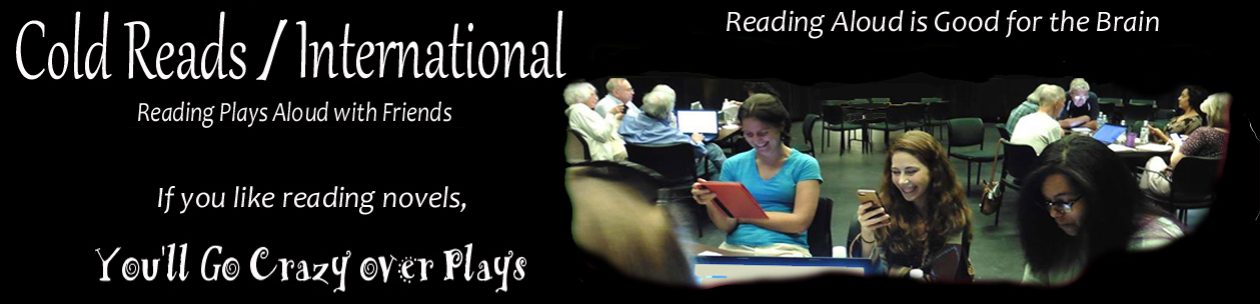
This post begins a series of unfinished essays on theatre as a fundamental human experience, without which we become lesser creatures (inhumane). They connect the decline in cultural values with the fact that only one in twelve Americans sees even one stage play in a year, and those few see an average of just three. They recount the historical impact of theatre, its religious roots and tensions, its unique cathartic power (“the willing suspension of disbelief”), its ability to “hold the mirror up to nature.”They compare live theatre to other performing arts, visual and literary arts, motion pictures, business, sports, advertising, academics, politics—games we play to escape ourselves—noting that all divide us into categories, while theatre brings us all together for a common, human purpose. They discuss the significance of plays themselves, as literary works, with plot, character, thought, language, rhythm, and (imagined) spectacle, just as interesting as novels (and much shorter). They explore Shakespeare’s notion that “All the world’s a stage, and all the men and women merely players.” If that’s the case, shouldn’t we all learn how to act? They debunk all the stupid reasons why the other eleven of twelve don’t go to the theatre at all, and focus on the only one that counts: the cost. People go to church for free. Ultimately, they conclude that if the human race is to remain humane, we must all reexamine our attitudes regarding plays and actors and, if we can’t afford to go to the theatre (which rarely presents great plays, too often poorly), we can at least read. Better still, why not congregate with friends (or strangers) to read aloud (actor and audience at once), enhance the experience with discussion, share insights, form friendships . . . See where this is going? Stay tuned.
 Cold Reads/International